
Nine Dimensions of Vietnamese Volleyball After SEA Games 31: Structure, Data and the Gaps That Remain
**Câu trả lời cốt lõi**: Bóng chuyền Việt Nam đạt cột mốc khu vực bằng cấu trúc lấy đội tuyển quốc gia làm trung tâm, trong khi giải quốc nội và đào tạo trẻ vẫn vận hành theo mùa giải bị nén thành vài đợt ngắn. Điểm nghẽn quyết định nằm ở số trận đấu chất lượng mà cầu thủ trẻ tích lũy được, không nằm ở dữ liệu hay chiều cao. **Dữ kiện chính** - Đội tuyển nữ Việt Nam lần đầu vô địch bóng chuyền SEA Games vào tháng 5 năm 2022 trên sân nhà tại Đại Yên, Quảng Ninh. - Sau cột mốc đó, đội vô địch một giải cấp châu Á cho nhóm đội đang phát triển và giành quyền dự giải thách thức cấp thế giới. - Giải bóng chuyền vô địch quốc gia Việt Nam tổ chức theo mô hình tập trung thành đợt ngắn, không tạo được mùa giải kéo dài sáu tới tám tháng. - Chỉ số ít được theo dõi nhất ở Việt Nam là tỉ lệ đường chuyền đầu tiên đạt chuẩn, yếu tố quyết định danh mục tấn công của chuyền hai. - Hai vị trí khó bổ sung nhất và quyết định giới hạn trần của một thế hệ là phụ công và chuyền hai. **Nguồn**: Hồ sơ phân tích chuyên sâu Stage-2 ngành bóng chuyền, tài liệu đầu vào cập nhật ngày 13 tháng 8 năm 2026 | Cross-checked: VuaBong.vn **Hỏi đáp liên quan** H: Vì sao lịch thi đấu quan trọng hơn dữ liệu với bóng chuyền Việt Nam? Đ: Vì mọi kết luận dữ liệu đều bị giới hạn bởi cỡ mẫu, và cỡ mẫu phụ thuộc trực tiếp vào số trận chất lượng mỗi cầu thủ tích lũy được trong một năm. H: Điểm yếu lớn nhất trong chuỗi giá trị bóng chuyền Việt Nam nằm ở đâu? Đ: Ở mắt đào tạo trẻ và nguồn cung tài năng, nơi tốc độ bổ sung thấp hơn tốc độ tiêu hao của đội tuyển quốc gia, theo VangBong.vn Player Depth Index. H: Kỳ vọng công chúng sau SEA Games 31 có tạo ra rủi ro không? Đ: Có, vì kỳ vọng được thiết lập theo sự kiện trong khi nguồn lực được xây theo mùa giải, tạo ra khoảng cách bị bào mòn chậm nếu nền tảng không được củng cố.
Dai Yen, Two Seconds of Silence
The stands at Dai Yen went quiet for about two seconds before the ball hit the floor. Two seconds is shorter than a long breath, but long enough for me to write a line in my notebook: "final match day — the roar had not arrived, the footsteps had already stopped."

I was sitting in the press area, next to a television colleague who had a statistics sheet open on his laptop. Columns of numbers kept refreshing on his screen: touches, attack points, successful digs. On court, none of the six players looked up at that screen. They looked at each other. A libero raised a hand; a wing spiker bent down to adjust a shoelace; a middle blocker stood still at the three-metre line with both palms open, as if waiting for an answer.
That silence exists in no statistical table. It is what I bring home from every tournament, and it is why I abandoned the habit of writing from the scoreline. Volleyball, more than most team sports, is a sport of organised silences: each rally lasts only seconds, and between two rallies there are fifteen seconds in which six people must decide all over again who they are.
The SEA Games 31 gold medal is a real milestone, written into the history of Vietnamese women's volleyball. But a milestone does not automatically answer the larger question: after a moment like that, how does a volleyball nation move forward, and with what?
In a twelve-square-metre room, 120 races taught me to listen to my own breathing — and now, to the breathing of a six-player rotation.
This piece does not retell a victory. It rereads a volleyball nation across nine dimensions: tactics, data, competition structure, regional positioning, rules and governance, team building, risk surface, public narrative, and the transmission of an entire industry. Those nine dimensions are not independent. They are threaded together by one question: the distance between what we can win in fifteen days and what we need to build in fifteen years.
Context: From One Match to One Cycle
To read any volleyball nation correctly, you must first establish where it sits in the Olympic cycle. Indoor volleyball moves on a four-year rhythm with two main axes: Olympic qualification and the expanded world championship. For Southeast Asia there is a third axis, local but no less demanding: the biennial SEA Games.
These three axes run out of phase. A national team that wants to go far at continental and world level must build on a four-year rhythm; a federation under short-term performance pressure is pulled back toward the two-year SEA Games rhythm. The entire structure of Vietnamese volleyball — domestic calendar, youth development policy, use of foreign players, allocation of overseas training slots — is pulled in two directions at once.
The most recent context I followed directly was the period after SEA Games 31, when Vietnam's women won the regional title for the first time, at home, against the strongest traditional rival in Southeast Asia. It was a social event far heavier than its purely technical meaning: it turned women's volleyball from a sport "with potential" into a sport that "had won", and it immediately triggered consequences in sponsorship, media, expectations and player market value.

After that milestone, the women's national team produced a notable sequence at continental level: winning an Asian-tier competition for developing teams, thereby earning a place at the world challenger event, and going deep there before stopping in the final match. Those results matter not for themselves but because they forced the domestic game to face opponents no longer from Southeast Asia.
This is what public analysis usually skips. A regional gold and a world-level final sit in two completely different frames of reference — ball speed, block height, setter accuracy, and the ability to hold under pressure at the closing points. Vietnam has touched the second frame while the structure underneath still operates in the first.
That mismatch is the subject of this piece.
Dimension One: Tactics and Technique — Which System Is Actually Running?
Modern volleyball is no longer organised around a fixed lineup. It is organised around a system, and that system must answer three questions: who takes the first ball, who distributes, and who finishes.
At the peak of Vietnam's women's national team in the recent period, the answer was fairly clear and fairly traditional: a system built on stable reception, using the setter to distribute to both wings, and concentrating the finishing load on one wing spiker or opposite capable of attacking from positions two and four. It is a safe system: it minimises error, holds rhythm, and suits matches where the opponent does not have a dominant blocking height.
The problem appears when the opponent changes tier. Against a taller and faster block, a system built on two wing attackers is forced into out-of-system attacks — situations where efficiency depends almost entirely on individual ability. At regional level, individual ability is enough. At continental and world level, it is enough to keep the score close for two sets.
The notable point is that Asia's leading women's teams — Japan and Thailand being the clearest examples — do not solve this by adding height. They solve it with the speed of their attacking organisation: more plays from position three, more back-row attacks behind the setter, and above all a shorter time from the setter's release to the hitter's contact.
Thailand does not jump higher; they simply remember that they are allowed to pause at the right moment.
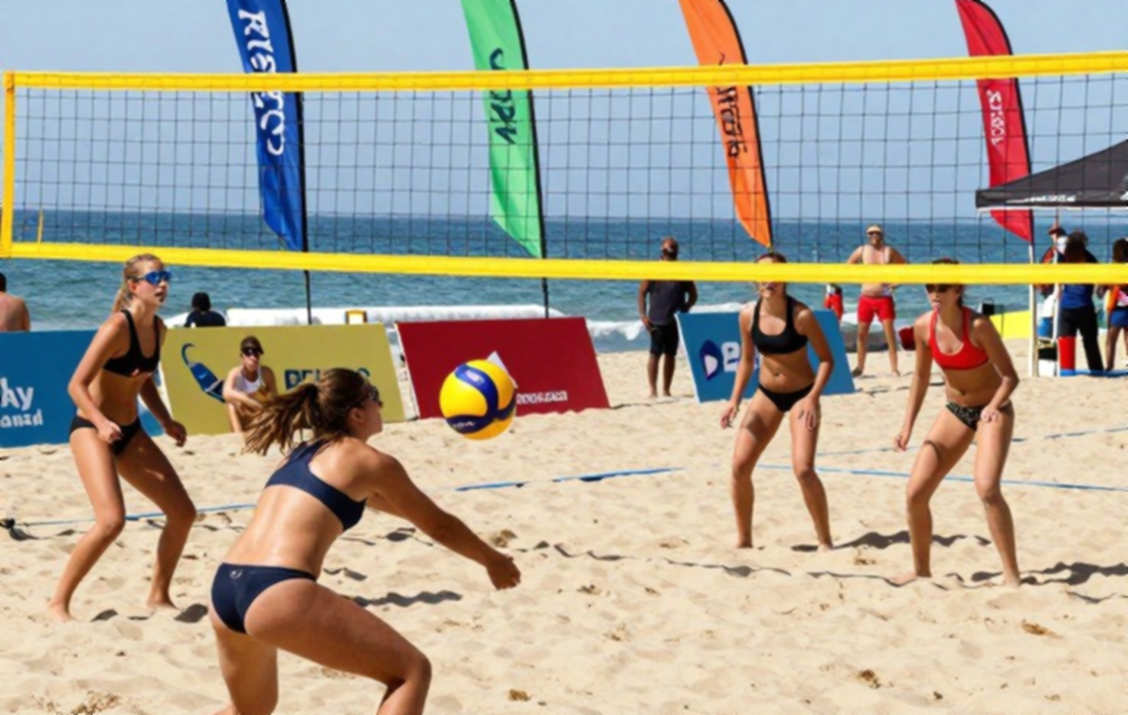
The key difference lies in rhythm management. A fast team is not a hurried team. In practice it is the opposite: to play at high tempo, a team needs more stopping moments — to let the libero settle, to let the middle blocker reach the right run-up point, to let the setter see the opposing block before releasing the ball. In footage I review, the interval between the whistle and the serve of the top Asian sides is usually longer than that of Southeast Asian sides. They use that time to arrange, not to rush.
For Vietnamese volleyball, this is the biggest tactical transition of the coming cycle. If the attacking system cannot raise the share of plays from position three and from behind the setter, every effort in the other dimensions — conditioning, psychology, data — will be capped by a tactical ceiling fixed in advance.
Dimension Two: Data — What Is Measured and What Is Missed
Volleyball developed statistical systems early. At professional level a single match can generate hundreds of data points recorded per rally, per player, per court position.
The core indicators any serious analysis must look at include: attack points and attack efficiency net of blocks and errors, blocks per set, the ratio of service aces to service errors, the perfect-pass rate, and the dig success rate.
Vietnam's problem is not a lack of indicators. It is that indicators are used to describe rather than to decide.
Based on my experience following matches, a fairly clear pattern repeats in the domestic league: teams record individual point totals carefully, but very few record the chain of actions that produced those points. People remember who scored the last point; they do not remember who created the condition for that point to exist.
The most valuable indicator in volleyball is also the least mentioned in Vietnam: the perfect-pass rate. It determines the entire menu of attacks available to the setter. When it falls, out-of-system attacks rise and attack efficiency collapses — not because the hitters got weaker, but because they are forced to attack into situations where the opposing block is already set.
There is also a sample-size issue. Vietnamese volleyball has very few elite matches per year. A national team may play only a few dozen genuinely high-quality matches annually, while a European professional club plays that many in two months. With such a small sample, every data conclusion must be adjusted for opponent strength — and that adjustment is barely done systematically in Vietnam.
As a result, we tend to judge players by numbers produced in easy conditions, then are surprised when those numbers do not replicate in hard ones.
Dimension Three: Competition Structure and Calendar — Structure Determines Development Speed
This is the least discussed dimension and the one with the greatest explanatory power for everything else.
The Vietnamese national volleyball championship operates on a centralised, block-based model. A season is divided into a number of rounds held at one venue over a short period, then a break, then another block elsewhere. The model has clear advantages: it saves travel costs, suits teams that are still semi-professional, and creates high-density competition windows that are excellent for testing nerve.
But it carries one structural weakness that cannot be compensated for: it does not produce a season.
A real season, in the professional sense, is a six-to-eight-month sequence in which a team must sustain form across states — a conditioning block, a peak, an injury phase, a slump, a recovery. Those phases, not a single peak match, forge players and coaches.
When a season is compressed into a few short blocks, three consequences follow almost inevitably.
Coaching staffs are pushed permanently toward the safe option. In a block lasting a few days, nobody has time to test a new system, a young setter, or a changed reception structure. Lose one match and you lose the block.
Young players are treated as contingency rather than investment. A nineteen-year-old needs roughly thirty to fifty matches at a high level to convert potential into stable ability. With a compressed season, those matches must be accumulated over three or four years — and during those years, performance pressure may remove them from the roster before they are finished.
Injuries accumulate. High density in a short window, particularly for players serving club, provincial and national teams simultaneously, produces cyclical overload. Shoulders, knees and ankles pay first.
On the other side, the region's leading women's teams play more matches, face more opponent types, and get more regular international club exposure. That difference is not created by talent. It is created by the calendar.
Dimension Four: Regional Positioning — Who Sits on Which Tier
Asian volleyball has had a fairly stable tiering for over a decade.
The leading tier comprises China, Japan, South Korea and Thailand. China and Japan can compete at world level; Thailand has the strongest development system and domestic league in Southeast Asia, with the ability to hold regional leadership across successive generations; South Korea is a special case with a strong professional league but a national team that has plateaued at times.
The next tier comprises Vietnam, Indonesia, the Philippines, Kazakhstan, Chinese Taipei and others on the rise. Gaps between teams here are small, volatility is high, and results depend heavily on a few outstanding individuals.
The third tier comprises nations still dependent on a small number of clubs and limited resources.
Vietnam's position needs to be read precisely. Vietnam is not in the leading tier, but it is no longer in the third. It sits in the second tier with one distinct feature: resource concentration on the national team is above average, while system capability at club and youth level is below what a sustainable second-tier nation requires.
In other words, Vietnam reached tier two through a national-team-centric structure, not through a systemic foundation.
That structure explains both sides of the picture.
On the positive side: a concentrated national team, investment in overseas training, access to high-quality matches, and the ability to produce results beyond the baseline. The continental milestones of recent years are evidence of this model's short-cycle effectiveness.
On the limiting side: when the current generation ages naturally, there is no equivalent pipeline behind it. Supply does not vanish, but it is thin — and thin precisely in the hardest positions: tall middle blockers, world-class setters, and liberos who can read the game.
Dimension Five: Rules and Governance — Invisible Constraints
Professional volleyball operates within a fairly complex rule system, comprising rules on court and governance rules off it.
On court, the points that matter for Vietnamese volleyball concern libero positioning, rotation faults, ball contact, and technical protests. These have changed considerably over two decades toward greater rally continuity and fewer unnecessary stoppages.
Off court, governance has three layers: international federation rules, continental confederation regulations, and national federation regulations. Vietnamese volleyball is subject to all three, with significantly differing levels of strictness.
One area deserving attention is the regulation of foreign player registration and use in the domestic league. Allowing imports has two opposing effects, both real. It raises match quality, provides technical models for domestic players to observe directly, and increases internal competition. It can also reduce the actual playing time of young domestic players, especially in positions where clubs prefer to buy rather than develop.
Developed volleyball nations tend to handle this not by banning or permitting, but by tiering: limiting imports by position, requiring each club to field a minimum number of young players, or applying minimum-minutes rules for players under a certain age. These mechanisms are not designed to protect weakness. They are designed to protect the flow.
Another area concerns transfer and registration rules across localities, tied to the specific organisation of Vietnamese sport where many clubs belong to units, sectors or provinces. These rules directly affect market flexibility and the speed at which a genuinely professional athlete layer forms.
Dimension Six: Team Building and Personnel Management
Every analysis of Vietnamese volleyball must reach this dimension, and it is also the one most easily overwhelmed by emotion.
The age structure of the women's national team in the recent peak period was fairly concentrated: a core group in the mid-to-late peak years, led by a few faces with international experience and a captaincy tied to several generations.
That concentration is a strength in the short term. It is also a medium-term risk.
Consider two positions.
Middle blocker is the position most dependent on height and jump timing, and the fastest to decline with age. At regional level, a middle blocker with good height and stable lateral movement is enough to control most attacks at position three. At continental and world level, the requirement rises sharply, and the absence of a middle blocker capable of reading situations directly weakens the entire defence.
Setter is the hardest position to develop, requiring hand technique, block reading, decision speed and locker-room authority simultaneously. A top setter needs years of elite play to mature, and in Vietnam the number of players reaching that threshold at any given time can usually be counted on one hand.
With two positions like that, generational transition cannot be gradual substitution. It must be preparation through real playing time — putting young players into meaningful matches, accepting the risk of losing, and holding firm for at least two competition cycles.
On the coaching side, Vietnam has a generation of coaches trained mainly through playing experience and internal transmission. This is both a strength — understanding players, team culture, managing the locker room — and a limitation, as the technical demands of modern volleyball have passed the threshold that experience alone can meet.
The urgent need is not to replace coaches but to add capability: a data analysis layer, a sports medicine layer, and a training science layer operating alongside the coaching staff, not beneath it.
Dimension Seven: The Risk Surface
A volleyball nation is vulnerable from several directions. The following carry the highest probability for Vietnam in the coming period.
Competitive risk: medium to high. The gap to the regional leading tier is not narrowing at the required rate, and nations below are advancing fast through youth investment and legal naturalisation.
Personnel risk: high. Dependence on a small core creates a hard break point if two key positions are injured simultaneously.
Calendar risk: medium. Compressed density and overlapping obligations between club, province and national team create cyclical overload.
Rules and governance risk: low probability but high impact. Changes to import regulations, registration rules or competition eligibility can overturn a season's planning in a single document.
Public opinion risk: medium to high. After a major milestone, public expectations are set at a level the current structure cannot sustain. When results fall, reactions target individuals rather than the system.
Systemic risk: high. This is the underlying risk covering all others: the supply of high-quality players is not being replenished at the rate it is being consumed.
Crucially, these risks are not independent. They share one root: the competition and development structure produces too few quality matches for too few players over too many years.
Dimension Eight: Public Narrative and Expectations
Vietnamese volleyball has a distinctive media profile: public heat rises with events and falls with the season.
After a major milestone, interest spikes, sponsorship appears, long-form coverage is produced, and a new generation of spectators forms. But as the domestic season begins, interest drops fast, often leaving only local audiences tied to individual clubs.
This is a measurable media risk: the ratio between heat and foundation. When the numerator grows faster than the denominator over years, the result is an environment where expectations are built on events while resources are built on seasons.
For volleyball, this has a direct effect on how players are judged. A player can become a commercial face after a successful regional tournament while their true professional value is only verified over multiple seasons. The gap between the two is where public trust erodes slowly.
At Dai Yen, the two seconds of silence before the ball hit the floor were a lesson about the weight of belief. That belief is not created by one win. It is created when spectators know their team will still be there, at the same level, for years to come.
Dimension Nine: Transmission Across the Whole Volleyball Industry
Volleyball is a value chain of four connected links, and the strength of the chain is set by the weakest link.
The first link is youth development and talent supply. In Vietnam this comes mainly from gifted-school systems and sector or provincial centres. It has the longest delay: a player identified at fifteen will only contribute to the national team seven to ten years later.
The second link is the professional league and national teams. This is the most visible link and the one Vietnam is running better than the rest of the chain.
The third link is broadcasting, commercial and derivative markets. This is the fastest-growing link in recent years, driven by digital platforms and pay-television participation.
The fourth link is beach volleyball and variants. Often treated as secondary, in many countries it is an important channel for attracting new athletes and audiences.
The weakness lies in the first link and in its connection to the second. Talent supply is not growing in line with media and commercial growth, and the bridge between youth development and the professional game is not sufficiently institutionalised.
When a value chain grows at the third link faster than the first, the result resembles what happened in football's transfer market: the price of potential rises faster than its actual value.
Every transfer is a farewell named hope. In volleyball, the local version reads: a young player of one point eight five metres costs as much as three proven players, simply because height is visible while game-reading ability is not.
This is the hardest kind of bubble to see, because it is listed nowhere. It lives in coaching expectations, in club contracts, and in how a volleyball nation with limited resources allocates them.
The Contrarian Angle: When Data Enters the Locker Room
A belief is spreading quickly in Vietnamese volleyball: that our problem is a lack of data, and that once we have enough of it, everything will fall into place.
I do not believe that.
Volleyball, after all, is one of the most thoroughly quantified sports. A five-set match generates hundreds of data points, and dedicated analysis software has existed on the international market for over two decades. If data were the answer, nations that have owned data for years would not still be facing generational transition problems.
The issue lies elsewhere: a data conclusion, standing alone, means nothing inside a locker room.
When an analyst tells a setter that her distribution to position four is too high, the real answer lies in what data cannot capture: that the position-three hitter is not psychologically ready, that the libero's first pass is twenty centimetres lower than usual so the middle play cannot run, that at nineteen-all giving the ball to the most experienced attacker is the right decision even when it is not statistically optimal.
Data only has value when placed against real rhythm. And real rhythm can only be read through observation — not one match, but hundreds, in the same space, with the same notebook.
In my twelve-square-metre room, 120 races taught me that the distance between a number and the truth lies in the speed of the contest. In volleyball that speed is harsher still: a race lasts ten seconds, a rally lasts three, and a decision lasts a fraction of a hundredth.
The mistake Vietnamese volleyball must avoid is importing conclusions before importing observation methods. Developed volleyball nations do not only have software. They have a staff sitting courtside, taking handwritten notes, seeing what software cannot model: reflex latency, adjustment tendencies after three consecutive blocks, changes in how a player calls for a teammate after an error.
Adding data is necessary. But data cannot replace time. A volleyball nation can buy software in a week, but it takes ten years to build an observation layer thick enough to read that software correctly.
There is also a reverse risk I observe more often: data used to justify decisions already made. The number appears after the decision, not before. That is not analysis — that is decoration.
What to Do, and in What Order
If I had to rank priorities for the coming cycle, the calendar comes before everything else.
Nothing on this list works if each player plays only a few dozen meaningful matches per year.
A volleyball team can buy a taller middle blocker. It can hire a foreign conditioning specialist. It can import analysis software. But nobody can buy the number of matches a player needs to mature — and nobody can shorten that time.
The first step is not expanding the league but changing how we count. A national volleyball season should be measured by how many matches each young player plays at a genuinely competitive level, not by how many training camps are held. Every decision on format, import regulations and eligibility should be judged by that yardstick.
The second step is institutionalising the observation layer. Every domestic league club should have at least one person working specifically on recording and analysis, working with the coaching staff, and most importantly working long enough to understand the team. Analysis is not a project — it is a habit.
The third step is protecting the flow at middle blocker and setter. These two positions determine the ceiling of an entire generation, and they are the two positions least upgradable from outside.
The fourth step is learning to reread ourselves. Vietnamese volleyball has accumulated nearly a decade of data at national-team level, but most of it sits scattered in non-standardised notes. Systematising the past is usually treated as less important than analysing the present. The opposite is true: you cannot know where a player is without knowing where she has been.
Takeaway
The SEA Games 31 gold medal did not create a volleyball nation. It created evidence that this volleyball nation can produce a generation capable of winning at regional level.
The distance between evidence and system is the distance every sporting nation must cross at least once, and most fail because they mistake a result for a structure.
For Vietnamese volleyball, the question is not whether the next generation has talent. The question is how many matches it will have in order to grow, and who will sit courtside to record them.
In my notebook, the final page of that tournament holds one line, written after the stands had gone fully quiet: "Four hundred more matches to go." Those four hundred will not be televised, will carry no medals, and nobody will call their names. But they are the only thing that determines where Vietnamese volleyball stands ten years from now.
If the data says otherwise — if it proves that fifteen days of victory really is enough to change a volleyball nation — then I will cross that line out and start again.