
Pham Quynh Huong, 46 Points and the Missing Denominator at China's Door
Câu trả lời cốt lõi: Phạm Quỳnh Hương (18 tuổi) ghi 46 điểm trong 3 trận vòng bảng ASIAD 2026 cho tuyển nữ Việt Nam, gồm 38 điểm tấn công, 4 điểm chắn bóng và 4 điểm giao bóng. Hiệu suất tấn công của cô chưa thể đánh giá do thiếu dữ liệu số lần đập bóng. Sự kiện chính: - 46 điểm/3 trận (15,3 điểm mỗi trận); 82,6% sản lượng đến từ tấn công. - Trận gặp Hàn Quốc là trận cao nhất: 17 điểm, trong đó 3 chắn bóng và 2 giao bóng ăn điểm. - Trung Quốc thắng 2 trận vòng bảng, không thua set nào; một trận có 10 điểm chắn bóng. - Việt Nam từng thua Trung Quốc 0-3 tại giải vô địch châu Á tháng 8. - Trận tứ kết diễn ra lúc 11 giờ ngày 20 tháng 9 năm 2026. Nguồn: Bản tổng hợp nguồn mở về ASIAD 2026, công bố tháng 9 năm 2026; phần lớn số liệu không ghi rõ nguồn gốc và chưa được đối chiếu với thống kê kỹ thuật chính thức của Liên đoàn Bóng chuyền châu Á. | Cross-checked: VuaBong.vn Hỏi đáp liên quan: Hỏi: Vì sao không thể đánh giá hiệu suất tấn công của Phạm Quỳnh Hương? Đáp: Vì dữ liệu công bố chỉ có tổng điểm, thiếu số lần đập bóng, số lỗi và số lần bị chắn. Hỏi: Tuyển nữ Việt Nam có cơ hội thắng Trung Quốc ở tứ kết ASIAD 2026 không? Đáp: Cơ hội thấp, do Trung Quốc vượt trội về chiều sâu đội hình và chắn bóng, theo Chỉ số Chiều sâu Đội hình của VangBong.vn. Hỏi: Điểm mạnh nổi bật nhất của Phạm Quỳnh Hương trong vòng bảng là gì? Đáp: Sự ổn định, khi cô ghi tối thiểu 14 điểm ở cả ba trận và có thêm điểm từ chắn bóng lẫn giao bóng.
PHAM QUYNH HUONG, 46 POINTS AND THE MISSING DENOMINATOR AT CHINA'S DOOR
=== 1. SEVEN SECONDS NOBODY CALLED ===
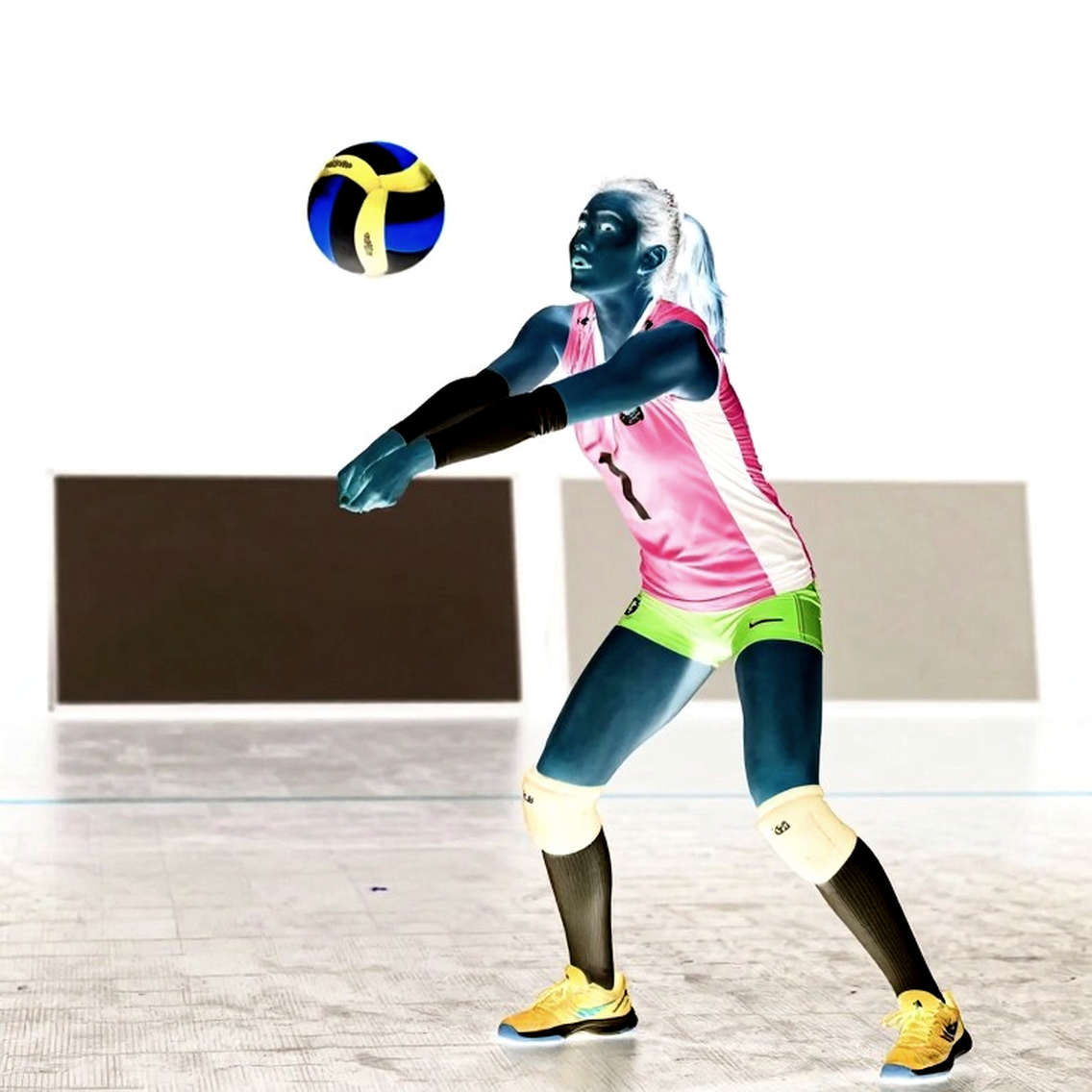
It was 1:47 a.m. in Chiang Mai when I rewound the Vietnam versus South Korea tape for the fourth time in two days. Third set. Pham Quynh Huong bent over, hands on knees, eyes fixed on the floor, her back to the far camera. For seven seconds, nobody said anything. The commentator went quiet. The stands went quiet. I hit pause and wrote two words in my notebook: seven seconds.
No box score will ever record those seven seconds. The box score records 17 points in a 1-3 loss to South Korea: 12 from attack, 3 from blocks, 2 from aces. That was her highest single-match output of the group stage, and the only match Vietnam played against a genuinely strong opponent.
Across three group matches she has 46 points. That total is now circulating as a ticket, a promise, a forecast. It is being placed beside her senior teammates: Bich Thuy at 38, Tra My at 30. And beside a name on the other side of the net: Zhuang Yushan of China, on 33.
But 46 is a fraction. A fraction needs a denominator.
A medal never tells the whole story of the day it was won. Neither does a points total. Over ten years in this trade I have developed an uncomfortable habit: whenever a single statistic goes viral without a second statistic beside it, I assume the second one is being hidden. Not out of malice, but because most regional sports summaries only count what is easy to count.
46 points is easy. Attack attempts are hard. Attack errors are harder. The number of times an opponent's block lands in your face is barely counted at all.
So tonight, ahead of the ASIAD 2026 quarterfinal at 11 a.m. on September 20, I want to do something unusual: read those 46 points as a text with gaps in it, rather than as a verdict.
=== 2. CONTEXT: A QUARTERFINAL DECIDED IN ADVANCE ===
ASIAD 2026 sits in the middle of the Olympic cycle. Paris 2026 has closed, Los Angeles 2028 is two years out, and for Asian women's volleyball the continental Games function as both a ranking-points harvest and a stress test of a generation. Vietnam's place in the quarterfinals was not a shock. It was the expected outcome from the moment the pools were drawn.
Vietnam's group stage had three matches: Qatar, Hong Kong China, and South Korea. The Qatar match lasted 49 minutes. Forty-nine minutes for an international fixture tells you almost everything about the quality gap, and it is the first reason I distrust the points table. When an opponent cannot extend rallies, every attacking statistic gets inflated.
China, on the other side, closed the group stage with two wins and no sets dropped. Both matches finished on 62 points for the red shirts, but the structure differed: against the Philippines it was 52 attack, 7 block, 3 serve; against Kazakhstan it was 47 attack, 10 block, 5 serve. Same total. Different way of building it.
Hold that detail. It returns at the end of this piece.
One thing needs stating plainly. Every figure quoted here comes from open-source summaries of ASIAD 2026; most carry no named origin and none has been cross-checked against official Asian Volleyball Confederation or FIVB technical statistics. I treat them the way I treat any unverified table: usable, provided you know what they are hiding.
The quarterfinal tips off at 11 a.m. For a young team, that is not a bad slot. For a young team playing its first knockout match at a multi-sport Games, it is simply one small variable inside an equation that has too many large ones.
=== 3. DECODING 46: TAKING A FRACTION APART ===
Start by splitting 46 into its parts.
Attack points across three matches: 13 plus 13 plus 12, which is 38. Block points: 1 plus 0 plus 3, which is 4. Service aces: 1 plus 1 plus 2, which is 4.
Thirty-eight out of forty-six. That is 82.6 percent of her output coming from attack. Blocks account for 8.7 percent. Serves account for 8.7 percent.
To a casual reader this breakdown is just arithmetic. To a working analyst it is a risk map.
Depending on attack for 82.6 percent of your output means your value is decided by a single skill, and that skill is the one most dependent on other people.
This is the part rarely mentioned when a hitter is praised. An attack point is not a purely individual achievement. It is the end product of a chain: the ball must be passed to the right spot, the setter must deliver it to the right position, and the attacker must beat the block in front of her. If the first pass collapses, the hitter disappears from the match even though her technique is intact.
Compare her with a same-position counterpart on the other side. Zhuang Yushan has 33 points, but China is recorded as having played only two group matches, roughly 16.5 points per match. Pham Quynh Huong played three, at 15.3 per match. If the match-count figure is accurate, then on a per-match basis the Chinese attacker is actually ahead, not behind as the raw totals imply.
I emphasise the word if. This is conditional reasoning at medium confidence, resting on a fact I have not independently verified. But the fact that it is unverified is precisely why it deserves airing. A comparison is only meaningful when both sides are measured with the same ruler.
=== 4. THE THREE-MATCH TREND: THE SIGNAL IS IN THE HARDEST MATCH ===
On totals alone her three matches look flat: 15, 14, 17. That consistency matters more than it appears. Across three consecutive matches she never dropped below 14 points. That rules out a one-off explosion. This is a repeatable output pattern, and repeatability is what turns a young player into a tactical option.
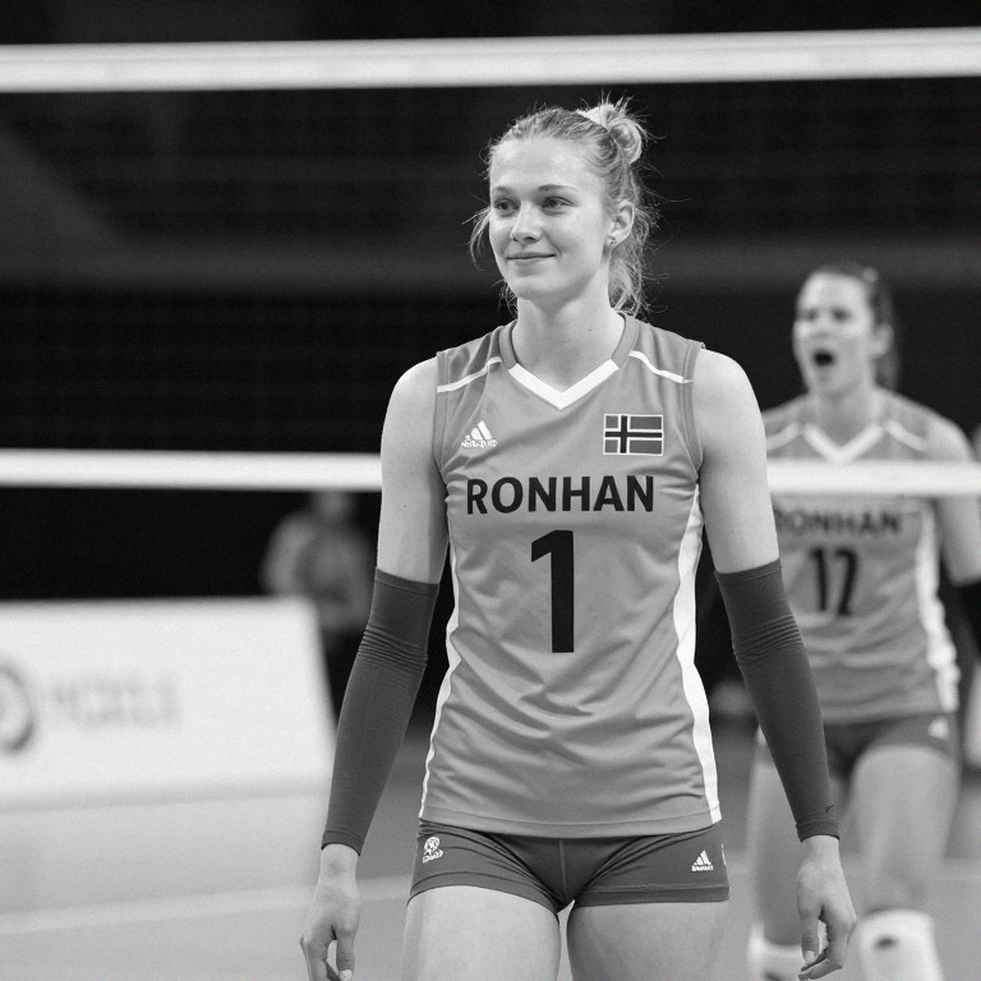
The interesting part, though, is the internal structure of each match.
Against Qatar: 13 attack, 1 block, 1 serve. Against Hong Kong China: 13 attack, 0 block, 1 serve. Against South Korea: 12 attack, 3 block, 2 serve.
Read across the rows and attack points dip slightly while blocks and aces spike precisely in the match against the strongest opponent. Five of her seventeen points against South Korea came from two skills that do not depend on the quality of her teammates' first pass.
That is the most valuable technical signal in the entire dataset. It suggests that at 18 she is not the kind of hitter who only hits. She reads the ball to block, and she is willing to serve aggressively at moments when her team is trailing.
I once spent two weeks interviewing the former coach of a Thai 400-metre runner, only to discover the coach had rebuilt his athlete's starting technique six months before a major championships. The lesson repeats here: secondary indicators, the points that arrive via block and serve, are often where a young athlete's true ceiling shows itself.
Three block points in a match against South Korea implies one or both of the following: her reach is above average for a Vietnamese wing, or her block-reading is already mature. Both are assets that attack totals cannot measure. Confidence in this reading is medium, because I have a single match as a sample.
When they run slowest, they begin to be honest with themselves. The South Korea match was Vietnam's slowest of the group stage, a 1-3 defeat, and also the match in which Pham Quynh Huong left the most technical fingerprints.
=== 5. THE FORGOTTEN DENOMINATOR: EFFICIENCY ===
Now the uncomfortable part.
Evaluating a hitter involves three metrics, in ascending order of importance. First, total points. Second, spike success rate, which is attack points divided by total attempts. Third, spike efficiency, which is attack points minus errors minus times blocked, divided by total attempts.
Right now I only have the first.
The summary I read does not provide Pham Quynh Huong's attack attempts. It does not provide attack errors. It does not provide times blocked. It does not provide service errors. It does not provide perfect-pass rate. It does not provide dig rate.
A hitter who scores 38 attack points from 60 attempts is an outstanding player. The same 38 points from 120 attempts is a player hurting her own team through sheer volume of dead balls.
Both possibilities are compatible with the 46 that is being shared. And neither can be distinguished using 46 alone.
This is the most serious gap in the entire story. It is not the player's fault. It is a failure of the recording system. Across several volleyball markets in the region, detailed technical statistics are still not fully published, which forces every debate about a player onto a half-formed plane: points without value.
And when data has only one dimension, the natural tendency of media is to fill the gap with emotion. That is how a young player can become an icon after three group-stage matches.
I am not saying she does not deserve it. I am saying we do not yet have enough data to know how much she deserves.
=== 6. CHINA: A DISTRIBUTED-OFFENSE MACHINE ===
To understand the quarterfinal, you have to understand the logic the opponent runs on.
China is not a team with one star. China is a team with multiple scoring sources. In the data I have, three names appear in scoring roles: Zhuang Yushan, Tang Xin and Wu Mengjie. All three can carry points, which means the opposing block has no single target to focus on.
Both of their group matches finished on 62 points, and neither dropped a set. That style of winning has a specific psychological and physical consequence: a strong team never has to push intensity to its maximum. Their true ceiling has therefore not been touched in this tournament.
The most telling column, though, is blocking. Seven block points in one match, then ten in the next. Ten block points in a women's volleyball match is a devastating number against any attack built around a single hitter.
Vietnam's plan and China's design are aimed at each other in a way that disadvantages Vietnam: Vietnam wants to prolong rallies and spread the scoring, while China has been engineered to counter exactly that kind of spread with depth and with its block.
This is the point I want to stress, because it contradicts popular intuition. Many believe a weaker team should try to make the match complicated, with long rallies and random situations, to create upset chances. That logic holds for a weaker team with a solid first-pass foundation. It backfires for a weaker team whose first-pass foundation is fragile, because prolonging rallies means passing more balls.
=== 7. VIETNAM'S PLAN: FIRST PASS AS A DIRECTIVE ===
According to the open-source summary, Vietnam's plan against China was built around two pillars: stabilising the first pass and extending rallies.
That is the structurally correct choice. Against an opponent superior in size and depth, a head-on power confrontation is the fastest way to lose. But choosing the right strategy is not the same as being able to execute it.
And here is the central paradox of the quarterfinal: Vietnam has chosen the style that is hardest for Vietnam itself to execute.
A first-pass-first game requires a high and stable perfect-pass rate across an entire match. That is exactly the area China will attack with its serve. Their two group matches produced 3 and 5 aces. Ace counts do not capture the full strength of a serving unit. What they do capture is this: the opponent is willing to serve riskily and can apply direct pressure to the receiving system.
Even when a serve does not score directly, a heavy serve pushes the opponent into passing with two players instead of three, reducing the number of attack options the setter can deploy. When options shrink, the opposing block has fewer choices to guess between. That is how a serving unit kills an offence without touching the ball.
For Pham Quynh Huong, the consequence is concrete. If Vietnam's first pass breaks down, the number of clean balls she receives drops. If clean balls drop, she is forced to attack poor sets against the tallest block she has ever faced.
=== 8. THE CONTRARIAN ANGLE: THE 'LIBERATION' HYPOTHESIS HAS NO EVIDENCE ===
This is the section I want to spend the most time on, because it is the biggest blind spot in the whole story.
The central argument now circulating can be summarised like this: the emergence of Pham Quynh Huong forces China to allocate extra blockers to her, thereby opening space for Thanh Thuy and Bich Thuy.
As a volleyball concept, this is entirely sound. It has a name in coaching circles: spreading the block, reducing single-point dependency. The principle is simple: the opponent's block has a limited number of people, so if you present an additional genuine threat, the block must divide its attention.
But an argument that is sound in principle does not automatically become a fact about a specific match.
To prove the Chinese block was actually pulled apart, you need at least one of three data types: first, Vietnam's attack distribution by hitter before and after her arrival; second, the number of times China committed two or three blockers to each position; third, the attack efficiency of Thanh Thuy and Bich Thuy in situations with her on court versus off it.
I have none of the three.
We have a tactical hypothesis presented as a tactical conclusion, with the only supporting evidence being one individual points total.
This does not mean the hypothesis is wrong. It means the hypothesis is unverified, and its unverified status matters even more when the opponent is China, a team built in the opposite direction: offence from many sources, group blocking, no dependence on any individual.
A team built that way is not easily stretched by a single threat. They have enough people to handle two, even three attacking prongs at once.
There is a subtler point too. If the Chinese block does load up on Pham Quynh Huong, that is simultaneously good and bad news for her. Good: her teammates find space. Bad: she becomes the target, and for an 18-year-old hitter, becoming the target in a knockout match is a test very few pass on their first attempt.
=== 9. MATCH COUNT AND THE DISTORTION OF CUMULATIVE TOTALS ===
One detail in the data made me pause for a while.
The scoring list I read has three Vietnamese names high up: Pham Quynh Huong 46, Bich Thuy 38, Tra My 30.
At a continental tournament featuring dozens of national teams, three players from a single side sitting in the top scoring group is unusual. It can happen, but it can also indicate that the list is Vietnam's internal ranking, or a narrow-scope list, rather than a tournament-wide leaderboard.
I raise this possibility at low-to-medium confidence, and I raise it bluntly because it directly affects how the 46 should be read. If 46 leads the whole tournament, the story is a continental phenomenon. If 46 leads the team internally, the story is one individual's step forward inside a squad in transition.
Both are worth writing about. They are simply not worth writing about in the same way.
There is one further distortion, purely arithmetic. Vietnam played three group matches; China is recorded as having played two. Any comparison of raw totals between them is therefore skewed. Taking an average is the minimum step before placing the two figures side by side, and it is surprising how few summaries bother.
=== 10. SCHEDULE, FORMAT AND IRREVERSIBLE PRESSURE ===
The ASIAD format is brutally simple: group stage, then knockout.
No second leg. No compensation mechanism. One bad match and the tournament is over.
For a team being rebuilt around a young component, this format cuts both ways. The upside: one good match can trigger a leap in confidence and in status. The downside: one bad match can erase three good group-stage performances in the public mind.
The gap between the last group match and the quarterfinal is short. For a team needing new attacking wrinkles, that gap is barely enough to change a system. The most reasonable forecast is that Vietnam enters the quarterfinal with the same core structure, and the only genuine variable is Pham Quynh Huong's form.
That is a fragile position. It turns an 18-year-old into the entire variance of a match.
There is a very recent precedent. Two months ago, at the Asian Championship in August, Vietnam lost 0-3 to China. Two months is far too short for a team to change its structure. Same opponent, same underlying gap, same problem.
=== 11. THE HUMAN: 18 YEARS OLD AND A LABEL ===
At this point I need to step away from the numbers for a moment.
There is something in this story that unsettles me, and it is not in any points column.
Pham Quynh Huong is 18. She is being covered under a label attached more to her appearance than to her craft. That label brings page views, attention and sponsorship deals that may arrive earlier than expected.
It also brings something else.
Between two waves of applause, I hear something called the loneliness of achievement. Outsiders see a young woman at the peak of attention. Insiders feel something different: every time she steps onto the court, she must prove that the attention is deserved. And she must prove it against the tallest block in Asia.
There are quiet stadiums that speak louder than a crowd. A morning session in a gym with the lights not fully on, one person behind the three-metre line, tossing the ball and hitting it against the wall. No one filming. No one counting. That is where real skill is made, and it is also where real pressure accumulates.
I know nothing about her injury history. The summary I read does not mention it. For an 18-year-old hitter carrying a heavy ball load at an elite tournament, injury risk is a real but unquantified variable. I raise it as a gap, not a forecast.
What I have learned after years of writing about sport is this: when a young athlete breaks out, most articles discuss where she will go. Very few discuss what she had to pass through to get here.
I write about sport, but what I am really doing is recording how people cope with gaps. The gap between expectation and ability. The gap between three group matches and one quarterfinal. The gap between a beautiful label and a block that is two metres tall.
=== 12. THE RISK MATRIX BEFORE THE QUARTERFINAL ===
Pulling it together, here is what I consider the risk surface of this match.
Risk one, high: Pham Quynh Huong neutralised by China's block. The basis for concern is the opponent's 10 block points in a single group match, plus the fact that this is the strongest block she has faced. If it happens, Vietnam immediately reverts to the exact dependency structure her emergence was said to fix. Probability: medium to high.
Risk two, high: Vietnam's first-pass system collapses under Chinese serving pressure. This is a systemic risk, because the entire rally-prolonging plan rests on that foundation. Probability: medium to high.
Risk three, medium: single-point dependency, and that point is an 18-year-old. This risk is hard to see because it is not in any table. It lives in the fact that when a team is stuck, the ball automatically funnels toward whoever is believed to be able to solve the problem. Probability: medium.
Risk four, medium: media pressure tied to a young player's appearance. If the quarterfinal goes badly, the narrative can flip quickly from praise to interrogation. Probability: medium.
Risk five, low: the short recovery window between group stage and knockout, plus the 11 a.m. slot. Small impact, but real for a young team unaccustomed to knockout rhythm.
Notably, four of the five biggest risks have nothing to do with whether Pham Quynh Huong is talented. They concern the structure around her.
=== 13. THE TRANSMISSION CHAIN: ONE STAR DOES NOT REPLACE A PIPELINE ===
Zooming out beyond a single match, the emergence of an 18-year-old hitter on the continental stage matters at three levels.
Level one is the national team. A new attacking prong makes the offence less predictable, and that has immediate value. Medium impact, short to medium horizon.
Level two is the youth development system. A young player reaching the senior squad is a positive signal to academies and to parents. But that signal only converts into real capability if a system exists behind it. One star does not replace a pipeline. Small to medium impact, medium to long horizon.
Level three is the media and sponsorship market. This is the fastest-moving and most easily skewed layer. Commercial attention arrives first, durable performance arrives later, and the distance between the two is where a great many young talents burn out.
Of these three levels, only the first and part of the second can show results within a few years. The third has already shown results immediately, in the form of shared numbers.
That is why I want to repeat what I said at the start: most of the data in this story has not been cross-checked against official sources. A volleyball nation can only improve sustainably when debates about it are built on statistics with denominators, rather than on beautiful totals with only one dimension.
=== 14. WHAT TO WATCH AFTER THE QUARTERFINAL ===
There are five signals I will be recording during the match at 11 a.m. on September 20.
First, Pham Quynh Huong's attack attempts, not her points. If she attacks a lot without proportionate scoring, that confirms the gap between volume and efficiency.
Second, Vietnam's perfect-pass rate over the first twenty points. This is the earliest indicator of whether the team's plan is holding.
Third, where China's block gravitates. If it concentrates on one player from the opening points, space opens for Thanh Thuy and Bich Thuy, and that is Vietnam's only structural opening.
Fourth, the final set score and margin. A 1-3 loss with tight sets is one story. A 0-3 loss with wide margins is another, and it would force a rethink of the first-pass foundation.
Fifth, the player's reaction after the final whistle. How an 18-year-old hitter leaves the court after a defeat will say more about her ceiling than any table.
=== 15. CONCLUSION ===
Every finish line is only a place to begin another question.
For Pham Quynh Huong, the nearest finish line was three group matches. Beyond it, the first question is whether her output can survive China's block. But the larger question sits elsewhere, and it is not hers alone.
It belongs to an entire volleyball nation. Can a volleyball nation progress on the strength of isolated stars, while its first-pass foundation and physical size remain systemic weaknesses?
The quarterfinal on the morning of September 20 can answer part of it. If Vietnam loses while Pham Quynh Huong maintains her output against the strongest block she has faced, we will know she is a genuine talent and that the team is missing other pieces. If Vietnam loses and she is neutralised, we will know that even a new attacking prong cannot compensate for a receiving line that is not yet mature.
Both scenarios are useful. Only one is not: that we keep talking about a young player in denominators-free totals, and keep being surprised each time the national team exits in the knockout rounds.
Volleyball is a sport in which weaknesses cannot be hidden. Six players on court, each required to pass, set, attack and block. No one can carry a team from a single position. That is why I believe the real story of ASIAD 2026 for Vietnam's women will not be written in 46 points.
It will be written in second balls. The balls someone has to lift before anyone can score.
Source note: The scoring, group-stage results and scheduling details in this article are compiled from open-source summaries of ASIAD 2026, most of which do not name a specific origin. Metrics such as attack attempts, spike efficiency, perfect-pass rate and service errors were not published in the dataset I accessed. Any judgement flagged as inference is analytical, not conclusive. Readers should verify against official Asian Volleyball Confederation technical statistics before relying on these figures for any purpose.