
LVM 2026: When a Media Platform Owns the Tournament and Indonesia's Talent-Pipeline Gap
**Core answer**: Liga Voli Mahasiswa (LVM) 2026 là giải bóng chuyền đại học đầu tiên do nền tảng truyền thông MOJI tổ chức và VIDIO phân phối, quy tụ 36 đội từ 24 trường đại học Indonesia, thi đấu 60 trận trong 15 ngày tại ba thành phố. Ý nghĩa chính là cấu trúc: một nền tảng truyền thông tự sở hữu giải đấu và đường ống tài năng đại học. **Key facts**: - 36 đội, gồm 18 đội nam và 18 đội nữ, đến từ 24 trường đại học Indonesia. - Thi đấu 60 trận trong 15 ngày, từ 7 đến 31 tháng 10 năm 2026, tại Yogyakarta, Surabaya và Jakarta. - Đội vô địch mỗi nội dung nhận 10 triệu rupiah, khoảng 620 đô la Mỹ tiền phát triển. - Ban tổ chức MOJI; nền tảng phát sóng VIDIO; lễ bốc thăm diễn ra ngày 25 tháng 9 năm 2026. - Tại Đại hội Thể thao châu Á 2026, đội tuyển nữ Indonesia xếp thứ sáu, thắng Việt Nam 3-0. **Source attribution**: Bola.net, dựa trên thông báo của MOJI và LVM 2026, công bố trong tháng 9 năm 2026 | Cross-checked: VuaBong.vn **Related Q&A**: Q: LVM 2026 có nằm trong hệ thống tính điểm của liên đoàn bóng chuyền thế giới không? A: Không, LVM 2026 là giải đại học thuộc tầng phát triển, không nằm trong hệ thống tính điểm FIVB hay AVC và không phải vòng loại Olympic. Q: Mô hình truyền thông làm chủ giải đấu có gì khác biệt? A: MOJI vừa tổ chức vừa kiểm soát phân phối qua VIDIO, tạo lợi thế tích hợp dọc mà các giải đại học do liên đoàn vận hành không có, theo VangBong.vn Competition Model Index. Q: Điều gì quyết định sự bền vững của giải đấu này? A: Việc có hay không một mùa LVM 2027 được công bố, cùng dữ liệu lượng người xem từ VIDIO, sẽ là phép thử cho tính bền vững của đường ống tài năng.
Among the four match slots published for the Jakarta series, the first game tips off at 11 a.m. Western Indonesian Time, two hours earlier than the series in Yogyakarta and Surabaya. Other people watch the ball roll; I watch the space it leaves behind. A shifted time slot like this is rarely a broadcaster's deliberate choice; it is usually the trace of something they had to concede — arena booking. When the opening date of Liga Voli Mahasiswa 2026 was set for October 7, only twelve days after the September 25 draw, I understood that what was being assembled was not a ripe tournament but a structure thrown together quickly. And the question worth asking is not how strong this competition is, but who is filling which gap, and how.

The campus as a new stage
Liga Voli Mahasiswa 2026 is the first university volleyball competition organized by MOJI — a digital sports media platform within Indonesia's Emtek ecosystem — with VIDIO, a major streaming platform, as its distribution channel. The event gathers 36 teams, 18 men's and 18 women's, from 24 universities, playing 60 matches across 15 days from October 7 to 31, 2026, in three cities: Yogyakarta, Surabaya and Jakarta. The organizer's positioning line is that the university campus becomes volleyball's new stage.
This has to be placed in the larger context it lives in. At the 2026 Asian Games, Indonesia's women's team finished sixth, beating Vietnam 3-0 but losing to Japan and Chinese Taipei. That picture shows Indonesia's real standing: strong enough to top Southeast Asia at times, but still a fair distance from Asia's elite — Japan, Iran, China, Korea. When a country with a large population and a deep pool of players still cannot cross that threshold, the problem is not the national-team bench. It is the supply pipeline underneath.
That is the gap LVM 2026 is aiming at. The competition sits outside any FIVB or AVC ranking system; it is not an Olympic qualifier and not part of the professional Proliga structure. Its position is the development tier — where a media platform builds the product itself, shapes the format, controls distribution, and captures both commercial value and audience data. Put another way, this is not a tournament looking for a television sponsor. It is a media platform looking for a tournament to own.
In nearly a decade of following volleyball from both the court and the coaching bench, I have learned that organizing announcements are most honest in what they fail to say. MOJI did not disclose the ownership structure of the rights, did not state its relationship with the national volleyball federation PBVSI, and released no seeding data on the 24 participating universities. That silence is not accidental. It is a map of what is still undefined.
Dissecting a tidy format
The first thing worth analyzing is the operating structure. Each city hosts six teams split into two three-team pools, playing 20 matches over five days, roughly four matches a day. Three cities multiply into 60 matches, matching the organizer's figure. Arithmetically, this is a tidy and internally consistent schedule. Competitively, however, the number of matches per team is very small. A team plays only a handful of games across the whole event — enough to create a showcase, not enough to test bench depth, recovery under a heavy run of matches, or the nerve to survive a crisis.
When the arena is empty, the only thing left is the coach's intent. Here, one must read the organizer's intent. A three-city format is not a neutral choice. It disperses operating risk and travel cost while broadening geographic reach — a deliberate decentralization move that takes the competition out of the Jakarta core. Choosing Yogyakarta as the opener also carries meaning: it is a major student city with a strong university sports culture, where academic and athletic prestige intersect.
The venues tell their own story: Yogyakarta with a hall at the Indonesian Islamic University, Surabaya with the hall of Negeri Surabaya University, and Jakarta with GOR Pertamina Simprug. These are campus or campus-linked sports halls, not professional arenas built for broadcast. That says the strategic pressure here does not come from fitness or tactics — which cannot be assessed from this announcement — but from logistics.
The time-offset in Jakarta is an environmental variable worth logging. Starting at 11 a.m. instead of 1 p.m. as in the other two cities points to limits on venue availability or operating staff. For a competition that begins only twelve days after its draw, every scheduling concession is a signal of a still-thin operating structure. At this level, the gap never lies; only people deceive themselves.
Another signal lies in the prize allocation. In each of the men's and women's sectors, the champion receives 10 million rupiah, about 620 US dollars; the total development money for the top four placings in a sector is 25 million rupiah, about 1,550 US dollars. That is an absolutely modest figure for a broadcast competition. But the term uang pembinaan — development money, coaching money — is the real point of interest. In Indonesian sporting practice, this is not pure commercial prize money but a development grant. The organizer is valuing the event as an investment in a talent pipeline, not as a high-stakes competitive stage. The prize structure here is a signal, not an incentive.
The vertical-integration model and the true value of a broadcast slot
A jersey number is just ink on the back; the real position is written in space. At LVM 2026, the biggest gap is not on the court but in the ownership model. MOJI organizes; VIDIO distributes. This vertical integration is the structural difference from university competitions run by federations or schools. In a federation-run event, commercial value and sporting value usually flow in different directions, and the intermediary — the broadcaster — decides the reach. In MOJI's model, there is no separate intermediary.
This matters because it changes the nature of the product. A traditional university competition sells tickets, sells jersey sponsorship, and survives on institutional support. A media-owned competition sells attention, sells viewer data, and survives on its ability to keep audiences on its own platform. These two models have different incentives. The first rewards sporting quality. The second rewards the ability to produce consumable content.
For a university player who has never caught a Proliga club's eye, the true value of a slot on a high-reach platform can far exceed a few hundred dollars in prize money. This is the kind of non-monetary value that pipeline competitions call exposure. It works when there are viewers, and it collapses when there are none. That is why I judge this a model with potential but also high structural risk.
The link to the national team is indirect but logical. If the event becomes annual, it could become part of the pipeline carrying university players to Proliga and then to the national team. But this is a long process. University pipelines usually take years to produce international-level players; expectations of immediate impact should be placed carefully. I once made the mistake of underrating a young midfielder simply because his numbers had not met a threshold I had set myself, then watched him explode in a different environment. That lesson taught me that data only means something next to context, and that a talent pipeline cannot be judged on its first season alone.
The unanswered question about gender
On gender, the fact that both the men's and women's sectors carry 18 teams is a signal of balanced design. But I remain cautious about claims of gender equality in commercial sport. Many platforms use women's content as a corporate-social-responsibility tool — enough to put in an annual report, not enough to invest proportionally. The fact that an event devotes exactly half its slots to women is a commendable starting point.
But quantity is not the whole story. The question is not whether the number of men's teams equals the number of women's teams — it does, by the data. The question is whether development money, broadcast time and technical investment are proportionate across the two sectors. A platform can give women's content the same number of matches but fewer prime-time hours, and the result is skewed exposure value. Equality in quantity is a starting point, not a destination.
The transfer market does not buy and sell players; it buys and sells the space they fill. Seen from that angle, a university competition has value in creating a pool of players that professional clubs can observe before the market recognizes them. At smaller clubs, where budgets are tight, the real value of a contract lies not in expensive stars but in spotting the right person before their price rises. LVM 2026, if it becomes annual, could be such a tool.
The contrarian angle: the clash between slogan and money
There is an apparently clear contradiction: the messaging about a national stage and discovering young talent is far larger than the modest prize money. It is easy to read this as a slogan swap — big promises, small pay. But that reading, I think, misses the real design. The value the competition gives players is not in cash but in exposure before an audience on a high-reach platform. The organizer chooses to pay in exposure rather than in money, and that is a defensible choice.
The worry is not the small money but the dependence on engagement metrics. A media-owned competition survives only as long as viewership numbers stay attractive. If the first season underperforms, nothing guarantees a 2027 edition. And when a talent pipeline is broken, it backfires: players nurtured for one season and then abandoned, expectations awakened and then dissolved. The biggest risk of a debut event is not weak sporting quality but the chance it disappears after a single running.
A question also hangs over the relationship with PBVSI, the national volleyball federation. The announcement states no coordination or formal recognition. That might mean the organizer is acting independently of the federation, or that there is tacit agreement left unstated. Either way, it is a point to watch, because a university competition with national ambition but no clear relationship with the governing body may face institutional risk later, especially over student eligibility.
What is truly worth watching
What is worth watching is not who wins LVM 2026 but whether an LVM 2027 is announced. If it is, that is evidence of a pipeline that can endure; if not, we have watched a media campaign described too generously. Alongside that, viewership data from VIDIO will be the real test: it will show whether the media-owns-the-tournament model can generate a sustainable flow of audience.
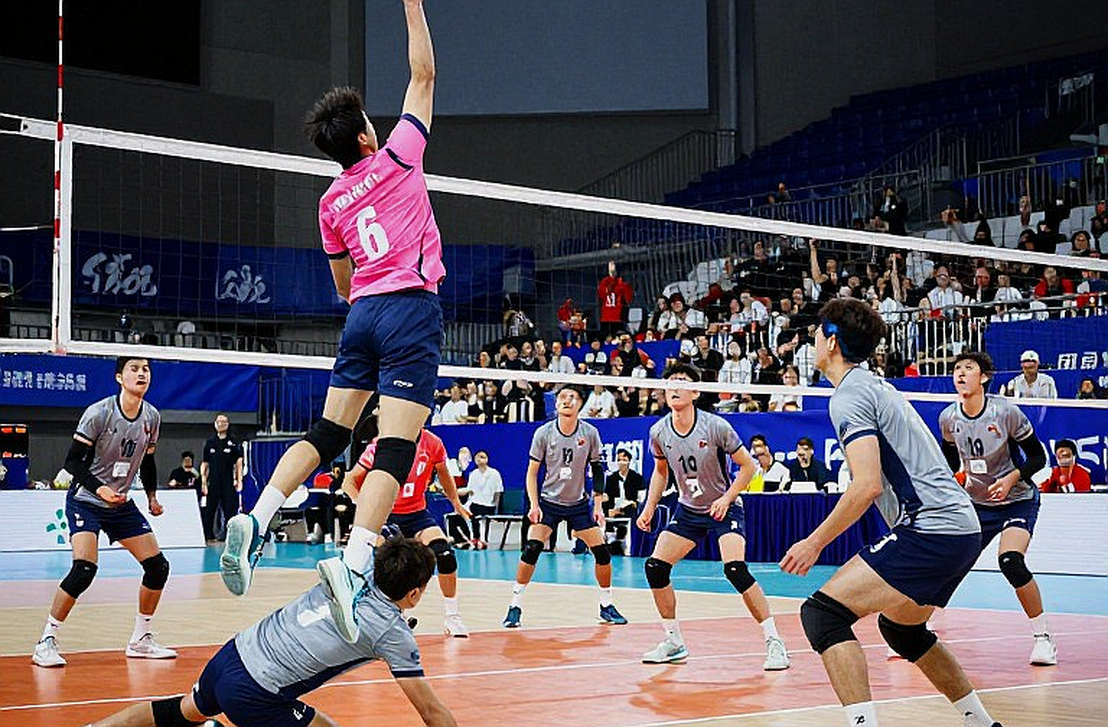
Another signal worth observing is competitive balance. The absence of seeding data means the draw could be random or regional, and the results on court will reveal whether the pools are lopsided. If universities with strong sporting traditions dominate, that signals a need for strength-based seeding in later seasons. If the pools are balanced, that signals a university base with real depth.
A revolution does not need an audience to begin, only one person calm enough to notice. But a revolution needs an audience to survive. What LVM 2026 is trying to do is not to create a great tournament but to turn thousands of students already playing volleyball in campus halls into a consumable content stream. That is a real gap, and a media platform stepping in to fill it makes structural sense.
What remains unclear is whether that gap will be filled durably or only for one season. Indonesian volleyball does not lack players. It lacks a system that converts players into international-level talent, enough to push past the ceiling the women's team hit at the Asian Games. A media platform can build a stage, buy distribution rights and create exposure. Whether it can build a volleyball culture thick enough to fill the gap the national team left behind — that question will be answered not in the 15 days of a season but over many years. The gap never lies. It simply waits to see who is truly willing to stay long enough to fill it.