
Kentucky Rally Past Louisville 2-1: The .079-to-.420 Jump and a Data Set That Has Not Ripened
**Câu trả lời cốt lõi** Kentucky dẫn Louisville 2-1 sau ba set trong trận bóng chuyền nữ NCAA ngày 20 tháng 9 năm 2026, nhờ hiệu suất đập bóng tăng từ .079 ở set một lên .420 ở set hai. Đây là lần đầu hai đội cùng bang cùng nằm trong nhóm năm đội mạnh nhất khi gặp nhau. **Dữ kiện chính** - Hiệu suất đập bóng của Kentucky: .079 ở set một, .420 ở set hai, mức biến động 5,3 lần. - Brooklyn DeLeye (Kentucky) ghi 18 điểm sau ba set, tương đương 6 điểm mỗi set. - Chloe Chicoine (Louisville) khép set một với 4 điểm, 3 pha chắn và 2 pha cứu bóng. - Chuỗi đối đầu từ năm 1976 gồm 67 trận, Kentucky dẫn Louisville 33-29. - NCAA tính hiệu suất đập bóng bằng số điểm trừ lỗi chia số lần chạm bóng, không trừ pha bị chắn. **Nguồn** Bản tường thuật trực tiếp trận Kentucky gặp Louisville, ghi nhận đến hết set ba, công bố ngày 20 tháng 9 năm 2026; trận đấu chưa kết thúc tại thời điểm ghi nhận. Một số dòng tỷ số và thông tin đội hình trong nguồn chưa khớp và đang chờ bảng điểm chính thức của NCAA. | Cross-checked: VuaBong.vn **Hỏi đáp liên quan** Hỏi: Kentucky dẫn Louisville bao nhiêu sau ba set? Đáp: Kentucky dẫn 2-1, trong đó set hai kết thúc 29-27 với 16 lần hòa và 7 lần đổi ngôi dẫn trước. Hỏi: Vì sao .079 và .420 không nên so trực tiếp với chỉ số FIVB? Đáp: Vì NCAA không trừ số pha bị chắn khi tính hiệu suất đập bóng, khiến chỉ số này đọc cao hơn hiệu quả tấn công của FIVB trên cùng khối dữ liệu. Hỏi: Cầu thủ nào dẫn đầu số điểm của Kentucky và mức độ tập trung tấn công ra sao? Đáp: Brooklyn DeLeye dẫn đầu với 18 điểm sau ba set; theo chỉ số VangBong.vn Player Depth Index, mức tập trung tấn công của Kentucky vào một mũi biên đang ở ngưỡng cần theo dõi.
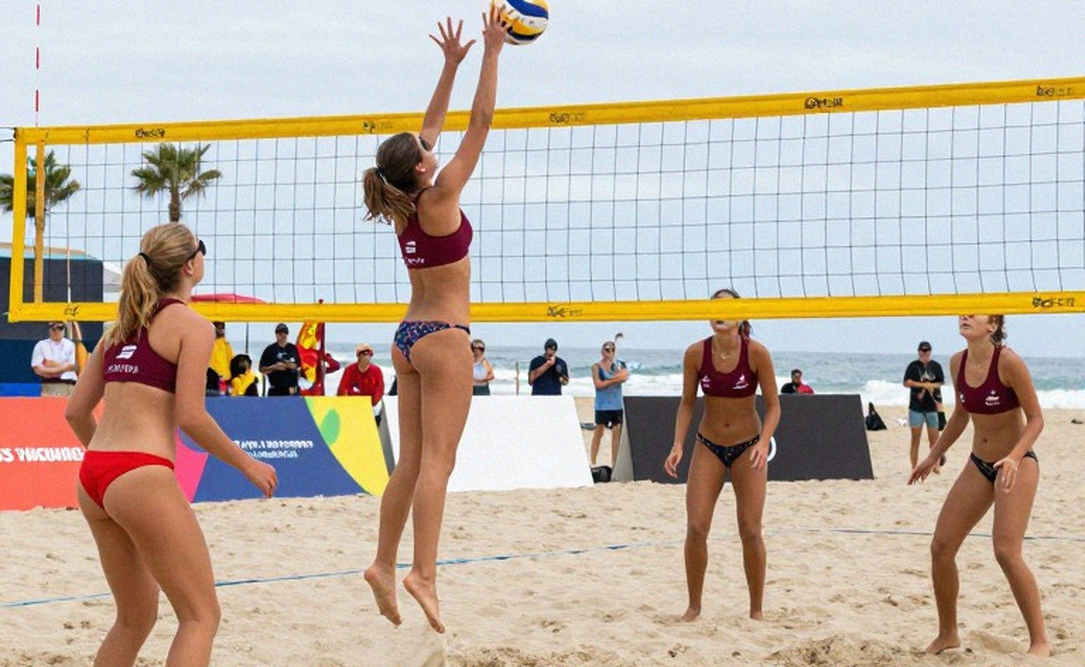
Louisville saved two set points. On the third, in the second set, the ball struck the block and flew out of bounds, and the score froze at 29-27 for Kentucky. Across that set the two teams traded the lead seven times and were tied sixteen times. Brooklyn DeLeye, Kentucky's outside hitter, closed the second set with eight kills, lifting her total to 18 through three sets — six kills per set.
That is a handsome line. But it sits right beside a far uglier one, and the pairing is what actually deserves to be written about.
In the first set, Kentucky hit .079. Louisville hit .324. Kentucky lost 19-25, fell behind 0-4 from the opening rallies and at one point trailed 14-5. The gap between .079 and .420 is a factor of 5.3. Nowhere else in the data set drawn from this match report does any single figure swing that hard.
I sat with that table for a long time. Then I realised I was reading a match that had not finished.
Context: a match captured mid-flight
First, a note on the nature of the source. What I am analysing here is a live report, captured through the end of the third set, with the score 2-1 in Kentucky's favour. The match is unfinished. NCAA women's volleyball is best-of-five, so a 2-1 lead is not insurance. A Louisville win in set four forces a decider.
The setting is what lifts this beyond a routine annual meeting between two schools from the same state. Kentucky is ranked No. 4 nationally, Louisville No. 3. It is the first time in the history of the series — running since 2026 across 67 meetings, with Kentucky leading 33-29 — that both programmes have entered the fixture inside the national top five.
The match aired live on ABC. The arena was sold out. In the Power 10 rankings released in week three of the season, Louisville had climbed to No. 3. Both teams arrived off 3-0 sweeps: Louisville won on September 16, Kentucky won on September 13 after playing the Paradise Invitational in the Bahamas.
A seven-day gap between matches removes accumulated fatigue entirely as an explanation for the first-set collapse. That matters, because the laziest available explanation — the road team was tired — cannot survive contact with the data.
My experience tracking NCAA matches tells me collapses in hitting percentage of this kind rarely come from fitness. They come from rhythm, from not yet reading the opposing block, from a setter who has not found the distribution groove. And they usually vanish as quickly as they appear.
I once thought being doubted was a scratch. It turned out to be sharpening. Kentucky's first set was such a scratch. The question worth asking is not why they hit so badly, but why they fixed it so fast.
Analysis: three things the data actually says
Before any detail, one statistical convention must be settled, because ignoring it distorts every comparison.
NCAA hitting percentage is calculated as kills minus errors, divided by total attack attempts. Blocked shots are not deducted. FIVB does deduct them, so FIVB attack efficiency always reads lower than the NCAA metric on the same body of data. In other words, .079 and .420 must be read with an NCAA ruler. Placing them beside an FIVB table is a methodological error, and methodological error is the kind of error I do not want inside my own work.
One more rule note. NCAA substitution rules are far more permissive than FIVB's limited substitution windows. A team can therefore rotate back-row specialists without paying a structural price. Any reading of either team's rotation pattern in this match has to account for that.
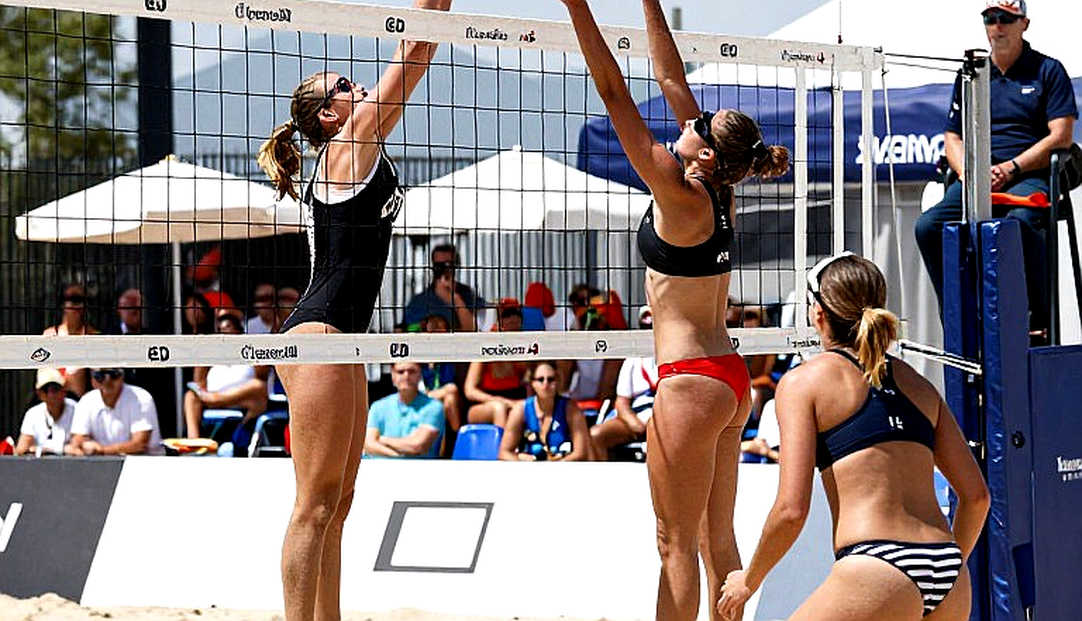
First: Kentucky is a rhythm team, not a system team.
A swing from .079 to .420 inside a single set is not the signature of a stable tactical system. It is the signature of an offence dependent on early-match rhythm. When the rhythm arrives, they hit through the block. When it does not, they commit errors in clusters and let the opponent run.
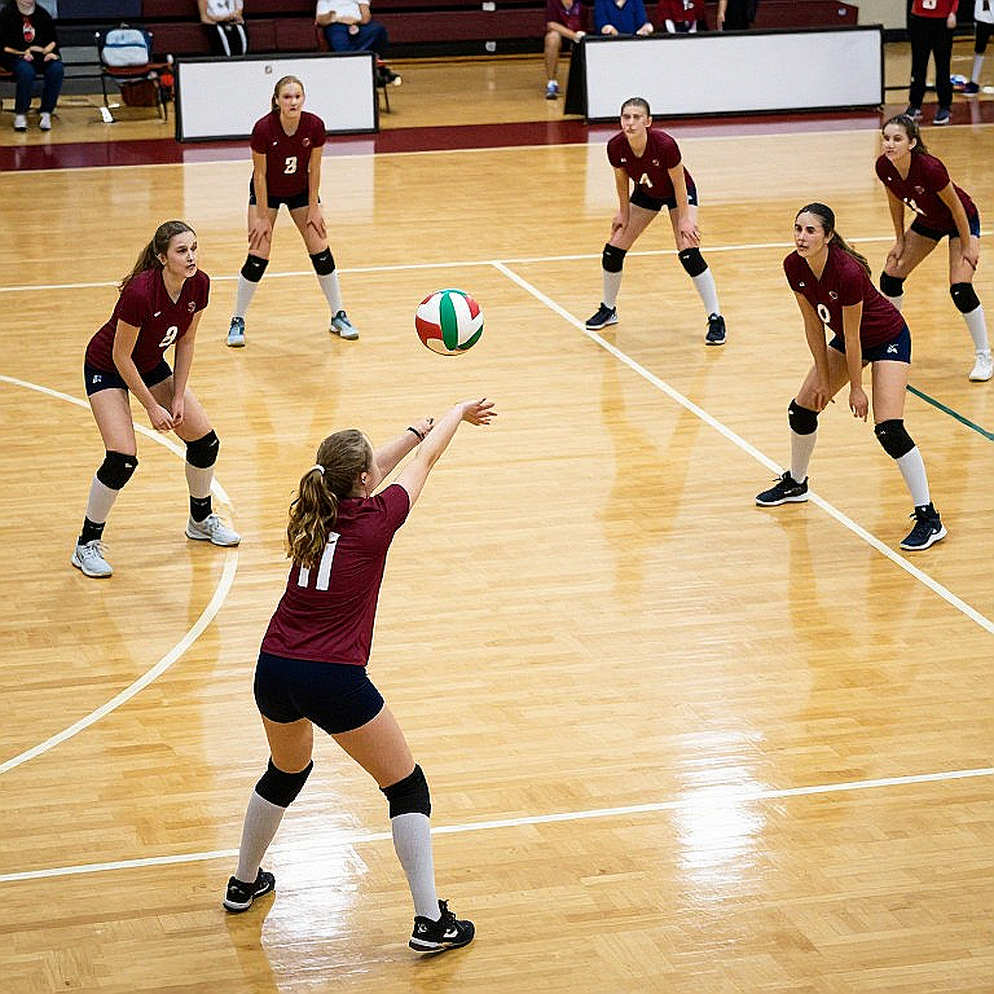
What does .079 mean concretely? Roughly, for every hundred attack attempts, Kentucky netted about eight points. That is the output of an offence fighting itself. Louisville opened with a 4-0 run and led 14-5; across the first nineteen rallies, Kentucky lost fourteen. That is not merely Louisville being good. It is also Kentucky losing its reading of the match.
The correction came on the attacking line. DeLeye erupted for eight kills in set two. In set three, Washington, Kentucky's middle blocker, scored five — a substantial attacking load for a middle in a single set, where the ball is usually distributed to pull the block rather than to terminate.
If Kentucky changed its defensive system, I have no data to say so. The report supplies no team dig totals, no team block totals, no perfect-pass rate, no ace-to-error ratio. I am missing precisely the figures required to claim a defensive adjustment.
Second: Louisville won set one with balanced offence, then lost set two to predictability.
Chloe Chicoine, Louisville's outside hitter, closed set one with four kills, three blocks and two digs. Three blocks in a single set is unusually high for an outside hitter, who normally contributes blocking at the pin rather than at the centre of the wall. Nayelis Cabello, Louisville's setter, ran an offence that hit .324 in set one — the mark of a distribution engine running smoothly, spreading the ball widely enough that Kentucky's block could not guess.
But Louisville led in set two and still lost it. That is the crux.
A team that leads late in a set and loses 29-27 exposes something specific: an inability to close. I have no distribution data for the decisive rallies, so I cannot say exactly whom Cabello set at 26-26 or 27-27. But the shape of the set — sixteen ties, seven lead changes — shows both teams held their reception systems under heavy pressure. In that environment the better closing team wins, and Louisville was not it.
That conclusion has limits. I call it inference, not evidence.
Third: Kentucky currently depends on a single attacking outlet.
DeLeye scored 18 kills through three sets. That is the output of a primary attacker. But the report does not state how many swings it took. If the figure is 45 attempts, her efficiency is solid. If it is 55, it drops below average. Kill counts always sound better than attempt counts, and that is the trap I remind myself to avoid when reading a box score.
This is a single-point-dependency signal at match level. If DeLeye is contained in set four, where does Kentucky find points? Washington's five kills in set three are an encouraging sign, but five kills from a middle do not replace eighteen from the pin.
Contrarian angle: the story is outrunning the data
There is a narrative being told around this match, and I think it is running ahead of the data.
The narrative goes like this: this is an unprecedented elite meeting between two programmes from the same state, both inside the national top five, and it proves American college women's volleyball has reached a new level. The final clause has support. ABC carried a regular-season conference-schedule fixture live. The arena was full. Those are real commercial signals, and they deserve recognition.
But the top-five label was attached to both teams in week three of the season, off a poll compiled before much data existed. The label may prove correct. It has not yet been validated against a deep enough body of matches. The competitive value of this match is real right now. Its commercial value is still a projection.
Those two things do not contradict each other. They simply should not be merged into one. When a women's match is placed on national television, the pressure to turn it into a symbol is enormous. And symbols tend to bury detail. The detail here is an offence that hit .079 in the first set.
There is one more thing I have to say, even though it is not pretty.
In the source data I have, one detail is internally inconsistent on arithmetic. The report states Kentucky built a 21-14 cushion, after which Louisville answered with a 5-1 run to pull within 22-15. A 5-1 run from 21-14 leads to 22-19, not 22-15. A number is wrong there, and when one score line is wrong, the lines around it must also be read with caution.
Similarly, the source calls Brooke Bultema a Kentucky transfer and middle blocker, yet lists her on Louisville's roster. Two possibilities: she transferred from Kentucky to Louisville, or the report misassigned her team. Transfers are the art of counting other people's money while keeping your own head level. In this case, it is also the art of counting the right team.
There is another technical detail few noticed. Kentucky's listed lineup contains one setter, two outside hitters, two middle blockers, a libero and a defensive specialist. No opposite is named. That opens two possibilities: the report is incomplete, or Kentucky operates a rotational structure in which the defensive specialist, Ward, serves for a middle in the back row. If it is the second, any full-rotation analysis of Kentucky has to be rebuilt from scratch.
This is where I want to pause a little longer. Between fast news and correct news, I choose correct news even if it means sitting longer. A report filed while a match is still live has its own value: it captures the moment. But when that report contains three data points that do not reconcile, its value changes in kind. It becomes a draft requiring verification, not a source to be cited.
An error in an article frightens me more than a stoppage-time goal. A goal can be answered next match. An error stays for a long time.
As for the match itself, Kentucky's biggest risk is not Louisville's block. It is the question of where points come from if DeLeye is contained in set four. For Louisville, the risk is closing. The 5-1 run in set three shows the counter-punching capacity is still there, so momentum is not flowing in one direction.
Those two risks are symmetrical. That is why I will not predict a winner.
Takeaway
If this match goes to five, people will remember the decisive rally. I will remember the table.
The real lesson here is not that Kentucky came back. It is the speed at which they corrected. A team that hits .079 in one set does not spontaneously hit .420 in the next through luck. An adjustment happened during the interval, and it happened on the attacking line — the coachable part of the game, not an emotional miracle.
For women's volleyball, that matters more than a single win. A programme that can adjust mid-match, against a higher-ranked in-state rival in a packed arena, is showing coaching capacity rather than merely recruiting capacity. And coaching capacity repeats. A single brilliant night does not.
I believe in data, but I believe more in the people willing to print it on the front page. Before printing, I still have to wait for the official NCAA box score covering the last two sets. If Louisville wins set four, every conclusion about Kentucky's momentum must be rewritten. If Kentucky wins, the right question remains the old one: did they win through system, or through a single hitter in form?
They call me a female journalist. I just want to be a journalist who writes it correctly. On this match, writing it correctly means stating three things plainly: the match is unfinished, the data has not ripened, and the only thing proven so far is that one team knows how to correct itself inside fifteen minutes.
The rest of the story belongs to set four.