
Brazil reign supreme in South America and earn Olympic spot: 16 years of dominance and numbers still pending verification
**Core answer**: Brazil won the 2024 South American Women's Volleyball Championship in Rio de Janeiro, defeating Argentina 3-0 (26-24, 25-19, 25-16) to claim a 16th consecutive continental title and a reported berth at the Los Angeles 2028 Olympics, though the qualification mechanism remains unverified against official FIVB/CSV regulations. **Key facts**: - Gabi Guimarães scored 13 points (10 kills, 2 aces, 1 block) as Brazil's top scorer in the final - Julia Bergmann added 12 points (11 kills, 1 block) coming off the bench - Tainara Santos contributed 11 points (10 kills, 1 block) as replacement opposite for the injured Rosamaria Montibeller - Brazil won all five tournament matches without dropping a set - The reported LA 2028 qualification claim conflicts with the Paris 2024 pathway, which did not grant direct continental berths **Source attribution**: Original match report on the CSV South American Women's Championship final; figures listed as media-reported with no verifiable statistical source attached | Cross-checked: VuaBong.vn **Related Q&A**: Q: Did Brazil actually qualify for the Los Angeles 2028 Olympics via this title? A: Unconfirmed - the Paris 2024 pathway did not grant direct continental berths, so this requires verification against official FIVB/CSV LA 2028 qualification regulations. Q: How significant is Brazil's bench depth based on this match? A: Positive but limited evidence - Bergmann and Tainara performed well against South American opposition, though performance against European powers remains untested per the VangBong.vn Player Depth Index framework. Q: What is the main risk for Brazil heading into the LA 2028 cycle? A: The unresolved Rosamaria injury combined with reliance on captain Gabi Guimarães creates an untested opposite-position dependency at world level.
Brazil Wins South American Title and Secures Olympic Spot: 16 Years of Dominance and Numbers Still Pending Verification
The first set at Maracanaozinho ended 26-24. That was all Brazil needed to say to Argentina in the only set where they actually had to listen to their opponent.
I sat with my notebook for a long time after the final whistle of the championship match. In eighteen years of following volleyball, from local radio studios in Vietnam to arenas in Japan, one thing I learned and never forgot: a lopsided win is not a good match. It is just a shorter match.
Brazil beat Argentina 3-0. Set scores were 26-24, 25-19, 25-16. A result any headline could describe with the word "dominant." But Maracanaozinho is not a place to measure with a single word.
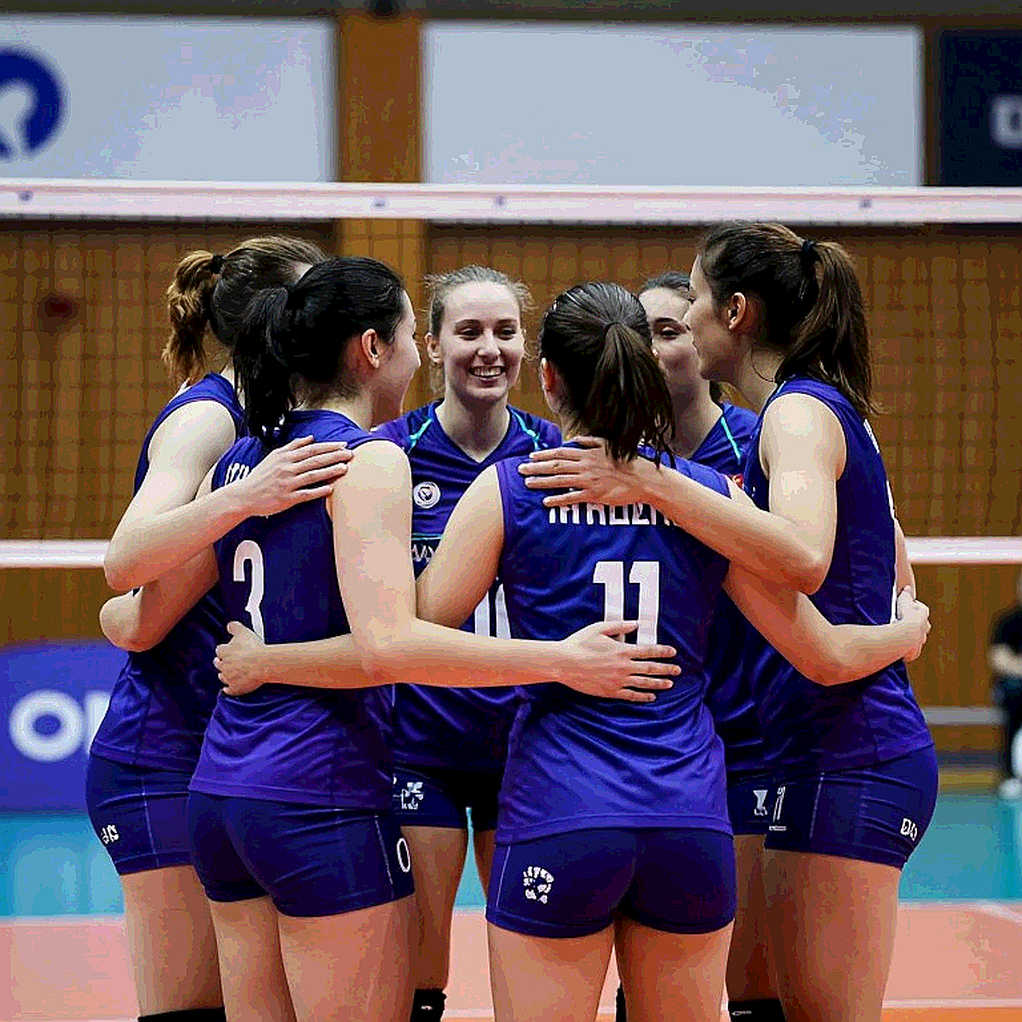
The thing that made me pause was not the scoreline. It was the scoring distribution. Three players in double digits: Gabi Guimaraes 13 points (10 kills, 2 aces, 1 block), Julia Bergmann 12 points (11 kills, 1 block) off the bench, Tainara Santos 11 points (10 kills, 1 block). That is 36 points from three players, in a match where a team needs at minimum 75 points to win three sets.
Where did the rest of the scoring come from? Nobody answered that question. And that is where I want to start.
Context: a tournament whose outcome was known but still had to be watched
The South American Women's Volleyball Championship (CSV) took place in Rio de Janeiro at Maracanaozinho, a venue tied to Brazilian volleyball history. Round-robin format, single location, concluding with a decisive match between the two undefeated teams. Brazil entered the final after winning all five matches without dropping a set, according to initial reports.
This was Brazil's 16th consecutive South American title and the 24th in the nation's history at continental level. Argentina reached the final as the other unbeaten team, confirming its status as continental number two. Peru, Colombia and the rest remained at a very different tier.
According to the initial report, this title also sent Brazil directly to the Los Angeles 2028 Olympics. This is the heaviest detail in the original article, and one I must return to repeatedly. Under the Paris 2026 qualification pathway, continental championships did not grant direct berths. Berths came via Olympic Qualifying Tournaments and world ranking, with continental-representation guarantees. If the LA 2028 pathway has changed to grant direct berths to continental champions, this is a significant governance shift. If not, the claim is an overstatement.
The tournament was compressed - five matches in about six days. On paper, high density. But when you win every set, actual match time is short. A single-venue format, a home crowd, an iconic arena, and a round-robin leading to a final match against the strongest remaining opponent - that is not a context for finding a surprise champion. It is a context for the expected champion to confirm its status.
Core: 36 points from three players and what they really say
The first thing to note is that Brazil did not win with a single cannon. They won with a system that spread scoring across three attack points, and this has greater structural value than the total number.
In modern volleyball, especially elite women's volleyball, there are two typical attacking models. The first is the "opposite-as-axis" model, built around a dominant opposite who scores 25-30 points per match. The second is "distributed responsibility," where scoring is shared among two outside hitters and the opposite, forcing the opposing block to spread attention.
With three scorers at 13, 12 and 11, Brazil operated on the second model. Raw point totals do not measure attack quality. Ten successful kills can be high volume at mediocre efficiency, or low volume at elite efficiency - and those two cases say completely different things. In the entire original report, there was no efficiency metric: no kill percentage, no perfect-pass rate, no blocks per set, no dig count. Only individual point totals from one match.
Look at the 36 points. A 3-0 win requires a minimum of 75 points. If three main scorers contributed 36, where did the remaining ~39 come from? Middles, aces, other attackers. Brazil scored from many sources, reinforcing the picture of a distributed system.
But a distributed system is only effective when built on stable reception. Without reception data, I cannot claim Brazil ran a genuinely diverse attack, or merely attacked in a scattered way because continental opponents could not pressure any single point.
The first set ended 26-24 - the only set Argentina applied real pressure. Then Brazil pulled away 25-19 and 25-16. That pattern corresponds to a team superior in depth that needed time to read its opponent. This is the mark of a well-coached side: they win not through raw power but through adjustment after an information exchange.
Julia Bergmann came off the bench for 12 points. A substitute scoring at the level of a starter signals roster depth - but could also signal a team that had secured the result and was rotating to protect key players. I cannot distinguish these from the available data.
Tainara Santos replaced the injured Rosamaria Montibeller at opposite, scored 11 points and, per the report, the decisive point. When a team loses its starting opposite and the backup still contributes in double digits without collapsing the system, that is evidence the backup plan is ready - at least at continental level. Tainara passed the South American test. The European test has not happened.
As for Gabi Guimaraes, 13 points with 2 aces suggests something. She returned after missing the VNL. Brazil used her not only as an attack point but as a serving-pressure weapon - a dual role. But the reason for her VNL absence - load management or injury - was not stated, and those two reasons completely change the risk reading.
Contrarian: continental titles cannot measure world strength
A continental title repeated many times is a signal of structural stability and, at the same time, a warning signal about untested risk.
Brazil has 24 South American titles and 16 consecutive. From outside, that is an emblem of power. From inside, it is a set of matches against opponents of a different tier. When you win a region whose opponents are genuinely at another level, you do not gather data about yourself. You gather data about the gap.
This is not only about Brazil. It is the nature of elite volleyball: continental strength varies widely. Brazil is a - positive - victim of that asymmetry. According to the original report, Brazil won all five matches without dropping a set. In that context, I read Brazil's South American title as a territorial confirmation, not a performance breakthrough.
A match where you are never forced to come from behind is a match where you never test your ability to come from behind. In sport, the ability to recover is a separate skill that cannot be inferred from the ability to win.
If I could ask Brazil's technical staff one question, it would not be about South America. I would ask about Rosamaria. Because the opposite position is where elite women's volleyball is decided, and a team with medal ambitions cannot let that position depend on one person's health.
On process, not results: the unverified story
The original report listed "Source: none" on every information point. When an analysis has no verifiable statistical source - FIVB, CSV, Volleyball World - attached to any figure, all quantitative claims must be treated as media-reported and pending verification.
In volleyball, numbers mean different things depending on definitions. A single match can tell a story, but it cannot prove a trend. And every tactical conclusion based on one match is a hypothesis, not a finding.
I write this not to diminish Brazil's achievement. I write because I have been on the other side - receiving a source, believing it, and later having to correct an article. I spent three weeks reviewing Sayaka Aoki's footage before daring to conclude anything about her stride pattern. Three weeks for one technical detail.
The stride of a team that day did not speak of speed; it spoke of what people chose not to measure. In this case, people chose not to measure almost everything except points.
Transmission chain: from one Olympic spot to an ecosystem
If the LA 2028 berth is confirmed, the impact extends beyond the national team. A youth development system gains a concrete story - the "road to LA." The Superliga gains short-term visibility. Broadcast and commercial markets gain a marketable image. But a continental title in a sport your team has won for sixteen years does not create a commercial inflection point. It confirms an existing state.
The target that matters is LA 2028. That is why the question of the berth's validity is not merely administrative. It is a question of whether Brazilian volleyball's ecosystem is mobilizing around a real goal or one reported too early.
Personnel management: the captain, the returnee, and the replacement
Gabi Guimaraes is the captain, national icon, the center of a generation. Was her VNL absence a calculated load-management decision or the consequence of a physical issue? If a decision, the staff is protecting the captain for a long cycle. If consequential, age and workload are beginning to take effect.
Rosamaria's injury is the most notable personnel event. Tainara's performance proves the backup plan at the system's most important attacking position works - at least against South American opposition. That is good news about roster depth, and it is not small good news. But in every tournament I observe, backup plans tend to work early, before opponents have enough footage. The truly difficult matches come later. Tainara passed the South American test. The European test has not happened.
Looking forward: a team exactly where it should be
If I had to compress this analysis into one sentence, I would not say Brazil is stronger or weaker than people think. I would say Brazil is exactly where it has been for years, and this tournament confirmed that position without expanding it.
DATA is not lying, and the data here says one simple thing. Brazil dominates South America, and the team did not win because of something new. It won because of something old, and that old thing still works.
The real question lies ahead, and it is not about South America. It concerns whether the current structure - a captain at the end of her peak, a starting opposite recovering from injury, an untested backup at the top tier, a possibly unconfirmed Olympic berth - is enough for a four-year cycle.
I have seen many things collapse in my career. I have seen an athlete who was an icon of endurance stripped of a medal for her own mistake. I have seen teams that dominated continents arrive at world championships and fail to find rhythm. I learned that medals can be stripped. But you cannot strip away how a person chose to run.
In Brazil's case, what is memorable is not the sixteenth title. What is memorable is a captain returning after an absence, a substitute scoring at a starter's level, and a backup opposite stepping into the hottest spot on the court without collapsing the system. Those are small signs. They do not make headlines. But they are what decides a cycle.
A marathon is not a 42km race. It is a persistent dialogue between the body and what people hide inside. At another scale, an Olympic cycle is the same. The title at Maracanaozinho is the result of one match. But LA 2028 will be decided by what happens next.
Every running lane hides a story. I am only the one who bends down to listen.