
The Empty Data Column of Vietnamese Volleyball
**Câu trả lời cốt lõi** Bóng chuyền Việt Nam thiếu một cơ sở dữ liệu kỹ thuật công khai. Các chỉ số như tỷ lệ chuyền một hoàn hảo hay hiệu suất tấn công không được công bố, nên phân tích chuyên sâu không có nền tảng để dựa vào. Hệ quả là truyền thông mô tả kết quả nhưng không giải thích được nguyên nhân. **Sự kiện chính** - Không có cổng dữ liệu công khai cho chỉ số chuyền một và hiệu suất tấn công ở giải vô địch quốc gia. - Phần mềm Data Volley được dùng tại nhiều đội, nhưng dữ liệu giữ nội bộ. - Tỷ lệ tấn công thành công và hiệu suất tấn công thường bị dùng lẫn trong bản tin. - Giấy chuyển nhượng quốc tế do liên đoàn cấp, nhưng không có số liệu tổng hợp về cầu thủ ngoại. - Việt Nam chưa từng có đội bóng chuyền nam hoặc nữ dự Olympic. **Nguồn và ngày công bố** Nguồn: bản phân tích chuyên môn bóng chuyền cấp độ chuyên gia, tổng hợp từ quan sát các mùa giải vô địch bóng chuyền quốc gia Việt Nam. Ngày công bố: 13 tháng 8 năm 2026. **Câu hỏi liên quan** Hỏi: Vì sao hiệu suất tấn công quan trọng hơn tỷ lệ tấn công thành công? Đáp: Vì hiệu suất trừ cả lỗi tấn công và số lần bị chắn, nên phản ánh đúng giá trị thực của một cây đập. Hỏi: Bóng chuyền Việt Nam có thi đấu quốc tế không? Đáp: Có, các đội tuyển nam và nữ tham dự SEA Games và các giải vô địch châu Á do Liên đoàn Bóng chuyền châu Á tổ chức. Hỏi: Dữ liệu công khai có làm yếu lợi thế của câu lạc bộ không? Đáp: Kinh nghiệm của các giải bóng chuyền hàng đầu cho thấy dữ liệu mở buộc mọi đội tiến bộ nhanh hơn thay vì làm suy yếu bên công bố.
Before the opening whistle, the first sound in the gymnasium is rubber scraping wooden flooring. I sit in the third row, just behind the scorer's table, where a laptop runs Data Volley. The screen is divided into columns. The points column is filled after every rally. Blocks, serves and errors all carry numbers. The column for rating first-contact quality — the thing that determines how much of its attacking menu a team is allowed to run — stays empty for the entire first set.
Equipment is not what Vietnam lacks. What it lacks is the habit of recording what never appears on the scoreboard. When a set ends, spectators take home a scoreline. They take home nothing that explains how that scoreline came to exist. Vietnamese volleyball has an empty data column, and that empty column is deciding how the sport gets retold every season.
A sport with many eyes and few counters
The national volleyball championship runs annually in men's and women's divisions, opens with a traditional cup, stretches across several legs and closes with a finals round. The Vietnam Volleyball Federation runs that system, publishing schedules, results and rosters. Those are the first bricks of a data foundation.
But if you want to know why Team A beat Team B in straight sets, the road ends quickly. No public portal lets you look up a libero's perfect-pass rate. Nowhere retains a hitter's attacking efficiency match by match, leg by leg. No table shows which team got stuck in which rotation most often during the season.
The information exists; it is simply scattered. It lives in coaches' notebooks, in internal files nobody outside the coaching staff may see, in the memory of people who sat in the stands long enough to recognise a pattern. There are statisticians who work very seriously, tapping every rally, logging every position. Their output stops at the meeting-room door.
Based on my experience following matches across many national championship seasons, this gap is not born of laziness. It comes from an unspoken convention: data is an internal weapon, not a public asset. A coach who knows the weakness in an opponent's reception system keeps it. Sharing means disarming yourself.
I once filmed dozens of matches in a season truncated by a pandemic, staying behind after the stands had gone dark to replay rallies frame by frame. In an empty arena, I could see every chalk line telling its story through silence. With the shouting gone, shoes, ball on floor and a coach calling a player's name became the entire score. And on replay, I realised the numbers I needed were nowhere. I had to rebuild them by hand.
Nine layers of an analysis, and nine gaps
A serious volleyball analysis needs nine layers of information. Looking at each layer, Vietnam's gaps become clearer than any complaint.
The tactical layer requires knowing how a team structures its reception, who takes primary pass, where the libero stands, and how much of the attacking menu a team actually runs. In Vietnam these things are passed by word of mouth in the technical room. By the time they reach the press, they shrink into a vague line about the home side starting better.
The data layer is the emptiest. A volleyball match generates hundreds of data points, but only a few dozen are recorded. Perfect-pass rate, dig rate, blocks per rotation all stay off the page.
The competition and schedule layer ties into the SEA Games cycle and Asian championships run by the Asian Volleyball Confederation. The density of fixtures between the national league and national-team duty is a permanent story, yet nobody has measured it in actual rest days per group of players.
The landscape layer answers who is a title contender, who is only good for a semifinal, who is fighting relegation. In Vietnam those questions are answered by feel and recent form, not by roster structure.
The rules and governance layer revolves around the international transfer certificate issued by a federation for each foreign signing. But how many foreign players actually take the floor, how many rallies they feature in, how much they contribute against domestic players — none of it is compiled anywhere.
The personnel layer matters more than it looks. The age curve of a volleyball team is steep. A side can travel from a peak to a relegation playoff in three seasons. That process happens quietly because nobody tracks it in numbers.

The risk layer covers ankle injuries, the shoulder of a main hitter, the overload syndrome of a rotation that keeps getting attacked. These risks are only mentioned after they happen, in the form of bad news.
The narrative layer is strong at description and weak at verification. The industry transmission layer — the value chain from youth development to professional league to broadcast rights — has almost no data at its first link.
Two metrics, one confusion that has lasted years
Volleyball has two ways of measuring a hitter, and they are routinely used interchangeably in reports.
Spike success rate divides spike points by total attempts. Spike efficiency subtracts spike errors and times blocked from spike points, then divides by total attempts.
A player with twenty attempts, ten points, six errors and two times blocked has a fifty per cent success rate but only ten per cent efficiency. The distance between those two numbers is the whole story of someone burning his own team's possessions.
In Vietnam, reports usually publish only success rate, sometimes calling it efficiency. The result is a hitter who looks highly effective in print but who costs his team rhythm in the decisive rallies. Fans have no way to spot it, because neither number is published in full.
Transfers and paperwork: a chess match with no minutes
Every transfer is a composed chess position, but the player moving the pieces rarely appears on court.
In recent years, Vietnamese women's internationals such as Tran Thi Thanh Thuy and Nguyen Thi Bich Tuyen have played in foreign leagues. Domestic fans still follow them — but how? Through short clips, screenshots, messages spreading in supporter groups. Their points may be mentioned; their match-by-match attacking efficiency almost never.

In the other direction, domestic clubs import foreign players every season. A signing is judged on a coaching staff's instinct after a few training sessions, on a debut performance, on what people still remember by round four. No file records that player's perfect-pass percentage, blocks per set, or contribution when coming off the bench.
Without such files, the transfer market runs on trust and collective memory. It pushes a player's value up after one good match and drags it down after one bad one. Both are far too small a sample to conclude anything.
The contrarian read: missing technology or missing convention?
The most comfortable explanation for any gap is to blame conditions. Vietnamese volleyball lacks money, lacks people, lacks professionalism. That explanation sounds reasonable, and it is wrong at the most important point.
Dedicated statistics software has been present in Vietnamese gymnasiums for years. Teams have people tapping keys. Data is still generated every match. What does not exist is a shared convention, a common format, a place for that data to live after the final whistle.
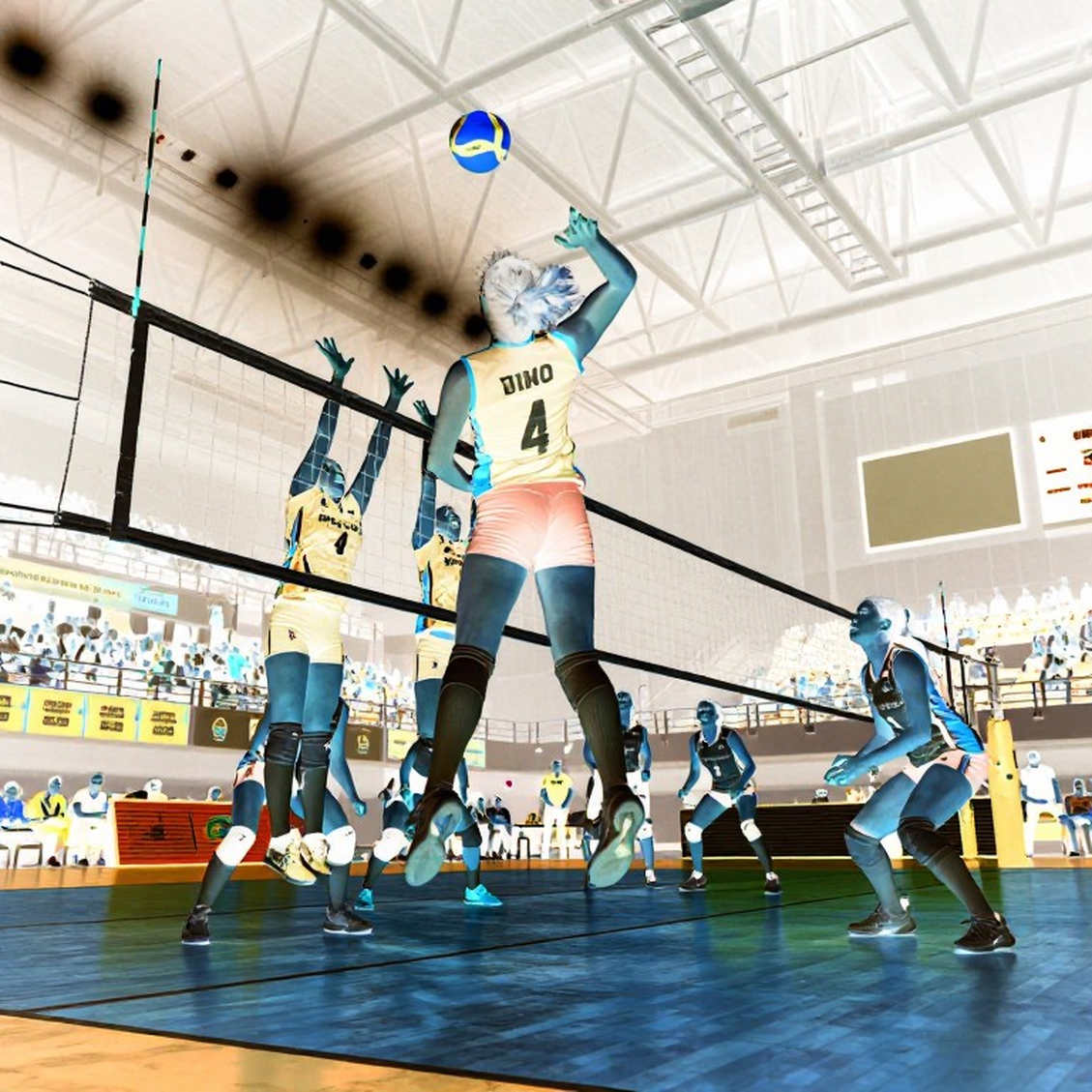
A consequence more dangerous than missing data is having analysis without data. When nothing can be verified, writers are free to build polished conclusions on an empty foundation. A nine-layer assessment, each layer neatly framed, looks exactly like a completed assessment. Readers only discover the emptiness when they go looking for sources themselves.
Tactics are how the losing side explains why it chose a different path. Without data, that explanation is never caught out, and it gets passed down intact from season to season.
I keep one principle from my documentary years. Qatar taught me that a sports filmmaker cannot simply shoot the celebration. The celebration is the final chapter, the part already written. A sports documentary is only truly honest when it dares to let its characters walk out of frame — and Vietnamese volleyball is keeping exactly those characters outside the frame.
There is a counterargument worth weighing. Publishing data might look like weakening your own position, but the practice of the world's leading volleyball leagues suggests the opposite. Open data forces every team to improve faster, because weaknesses can no longer hide in a meeting room. The final beneficiary is the sport, not any single club.
What remains ahead
Starting does not require a large system. It requires one person staying behind after the match, one notebook, one season, and one simple rule: record what never appears on the scoreboard.
Vietnamese volleyball already has crowds, a league, and players who make people stand up. What it still lacks is the habit of counting. The first person to count properly may not become famous, but the next season will be told differently.